Harappa

Harappa, Punjab ancient Indus civilization excavations, figurines, seals and other objects.

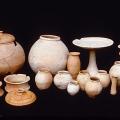
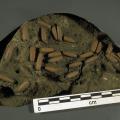
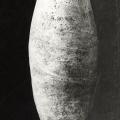
This form of tall flaring cylindrical vessel was probably used as a drinking vessel. Seven of these tall jars (referred to as oval jars) were found in a row and many had smaller cylindrical jars inside them. It is possible they were being stored in … >

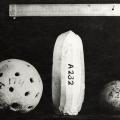
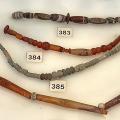
The long carnelian beads at the bottom of this image are among the most distinctive products made during the height of the ancient Indus civilization. Dr. Kenoyer writes (Ancient Cities, pp. 162): "Many of the long carnelian beads were traded as … >

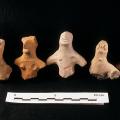
A collection of male figurine heads showing different types of headdresses and beards from recent excavations at Harappa. Harappa Archaeological Research Project. >

Collection of burial pottery without any painted designs. These vessels come from one of the later burials towards the end of the Harappan period, possibly dating to 1900 B. C. >

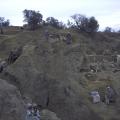
Excavations on Mound AB in 1998 began with the clearance of surface debris to expose the many habitation levels, beginning with natural soil in the lower foreground. This view shows almost 1700 years of superimposed occupation levels beginning aroun… >

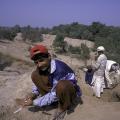
The discovery of a button seal is always exciting. Mushtaq, one of the excavation assistants from Harappa Town is proud to have found the second seal of the 1998 excavation season. >

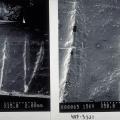
Scanning Electron Microscope analysis of the incising marks on the steatite tablets indicates the use of three different specialized bronze graving tools (see 58). Each tablet was first shaped from raw unfired steatite and then incised with the scr… >

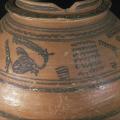
Late Harappan Period large burial urn with ledged rim for holding a bowl-shaped lid. The painted panel around the shoulder of the vessel depicts flying peacocks with sun or star motifs and wavy lines that may represent water. Cemetery H period, afte… >