
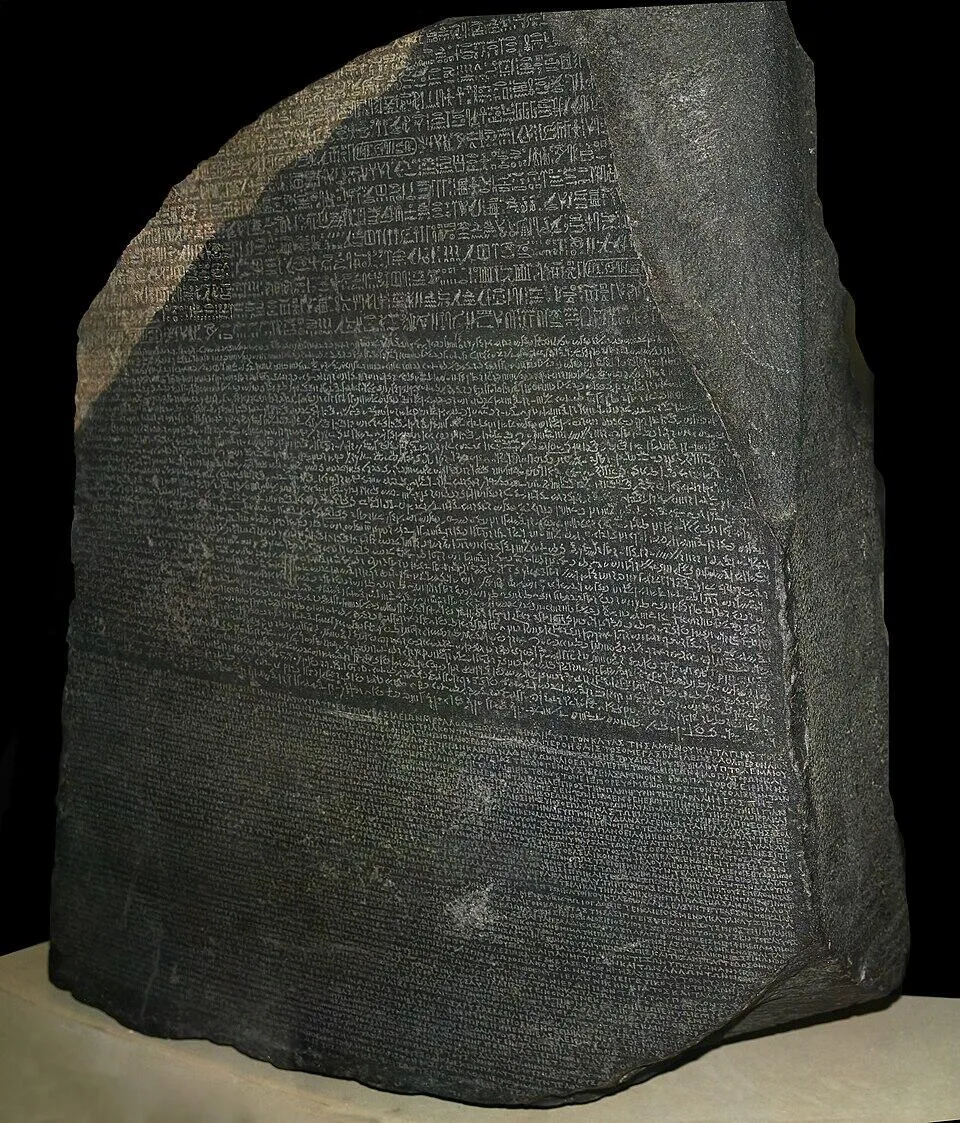
If a so‑called Rosetta Stone for the ancient Indus script is ever found—that is to say, a bilingual inscription with Indus characters and those in another known language—it would be a great boon to decipherment efforts. However, people often do not realize how difficult it actually was to decipher the original Rosetta Stone [Image 2] that led to the decipherment of Egyptian hieroglyphics. In fact, it took many years, in an age when information transfer and scholarly collaboration were far more difficult than they are now, for this work to be completed in the early 19th century.
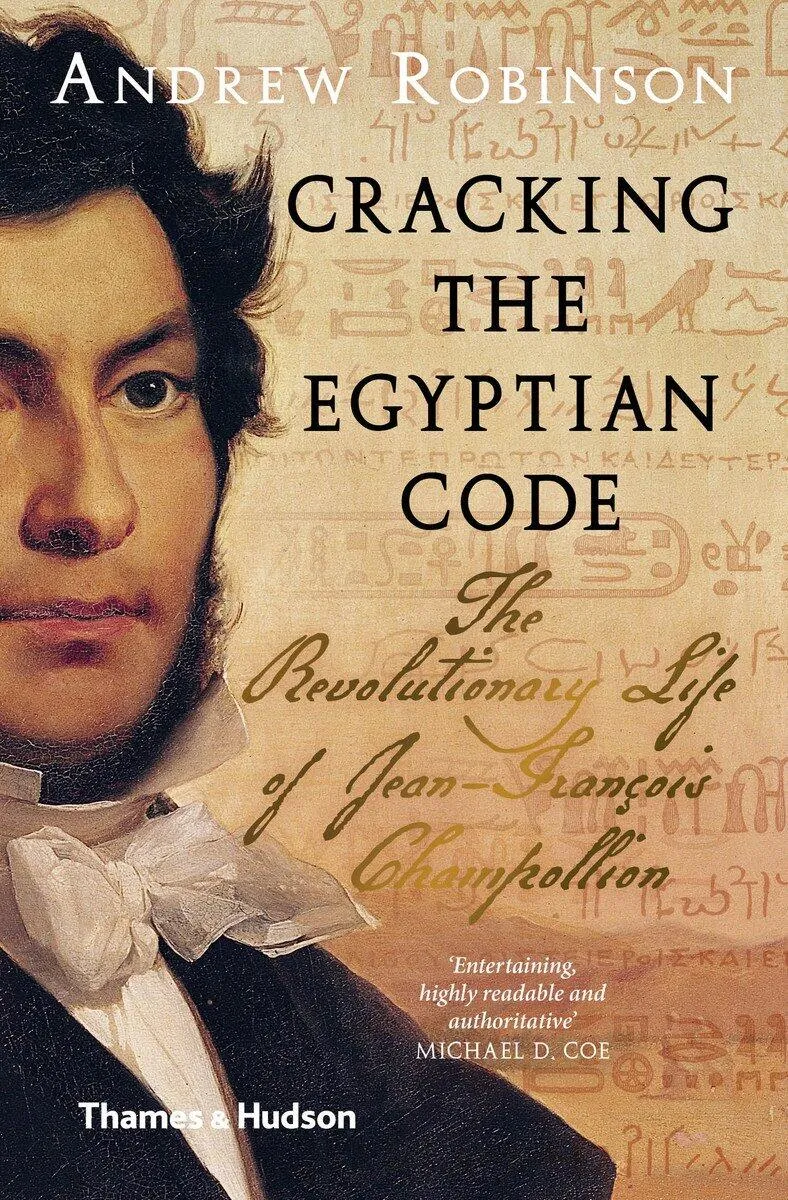
Andrew Robinson's Cracking the Egyptian Code: The Revolutionary Life of Jean‑François Champollion is the story of how this was done. Lucid, well informed, and accessible, this riveting account of the decipherment of ancient Egyptian hieroglyphs is in part the story of a gifted, complex Frenchman—Jean‑François Champollion (1790–1832)—at the heart of that effort and his times. The book provides a scholarly and engaging biography as well as a gripping chronicle of the intellectual rivalry that shaped a foundational moment in archaeology and linguistics. Robinson traces the discovery and significance of the Rosetta Stone, contextualizing it within Napoleon's Egyptian campaign and the “savants” who accompanied his army. The close collaboration between imperialism and scholarship is well described in the book. Indeed, there are more obelisks outside Egypt today than inside it, and it was an obelisk or two that played an important role in the decipherment. The sub‑plot of imperial rivalries and conquest casts a great deal of light on, and provided some of the energy behind, the effort. The narrative is not merely about the object itself and the political world around it, but about the intellectual climate and personal struggles of the early 19th‑century scholars who competed to solve a puzzle for which the Rosetta Stone was the entryway, especially Thomas Young and Jean‑François Champollion. Robinson dismantles various myths about Champollion’s life while giving rich detail on the fierce scholarly contest that led to the unlocking of Egypt's ancient script.
The well‑illustrated book excels in contrasting these two rivals. Thomas Young, a multidisciplinary English polymath, is given a nuanced and respectful portrayal. Champollion is shown as a brilliant, fiery, and driven linguistic prodigy—self‑taught in many respects, expelled from Paris at times for his politics, and consumed by his quest to uncover Egypt's lost language. Robinson is careful to show Champollion’s influences and debts (including to Young), yet makes clear that it was Champollion’s insights and perseverance that truly unlocked the code. Robinson’s engaging prose, his ability to mix technical scholarship with personal insights, and his knack for narrative pacing really bring the whole saga to life.
Champollion identified that Egyptian hieroglyphs constituted a “mixed” system—alphabetic, ideographic, and determinative. As he wrote in 1824, when announcing his discoveries to the world, "hieroglypic script is a complex system, a script all at once figurative, symbolic, and phonetic, in one and the same text, in one and the same sentence, and, I might even venture, in one and the same word," (quoted on p. 134). This insight corrected prevailing misconceptions that every symbol was solely pictorial or ideographic. He was able to see how complex the language was, which is a useful lesson to keep in mind when approaching the ancient Indus script. Too often, professed decipherments of Indus signs try to give them only one meaning, without recognizing how storied and layered the ancient mind was. This is why people who claim that the ancient Indus writing system is not really writing are also missing the mark: just because longer manuscripts have not been found does not mean that people then did not have them, and even so, the signs on seals probably had multiple meanings. Ancient Mesopotamian cuneiform is also highly complex in that the meaning or value of signs depends on context, which the reader has to figure out: the same sign can have multiple meanings, one sign can have multiple sounds, and one sound can be rendered with multiple signs.
In the case of hieroglyphics, Robinson shows how, rather than a single moment of revelation, Champollion's triumph came through years of disciplined trial, error, and linguistic skill, particularly his knowledge of Coptic, the final phase of the Egyptian language. The existence of a related, still‑attested language to draw upon was crucial, but the reconstruction of the other two languages on the stone was also essential to his success. After demonstrating the phonetic use of hieroglyphs in spelling foreign names (such as Ptolemy and Cleopatra), he had to painstakingly build upon that insight, and in the process helped to elevate the study of ancient Egypt into a scientific field. Champollion’s dedication was “make or break,” deeply personal and driven, and he created a coherent system for reading a vast array of inscriptions that formed the bedrock of modern Egyptology.
In short, the story of cracking the Egyptian code as gripping as any detective story. It also suggests that it might take a similar type of person or persons, even with the newer tools and methods available now, to decipher the ancient Indus writing system. Robinson ends his superb book with a postscript called "Geniuses and Polymaths." He contrasts Champollion and Young along these axes, and finds his sympathies "acutely divided" (p. 264) between the two (he also wrote a biography of Young). The Frenchman was the tortured genius, focussed, courageous, risking everything for success (he died young). Young was patient, methodical and had many interests which he brought together, a jack of multiple academic trades, who provided some of the key insights that Champollion built upon. "In my view," writes Robinson, "the single most fascinating aspect of the story of how Egyptian hieroglyphic script was deciphered is that both a polymath and a specialist were required to crack the code," (p. 266).
Whether we can properly combine these kinds of skills, personalities and motivations through a new platform, scholarly community or publishing world today to make progress with the ancient Indus script remains to be seen.
Image of the Rosetta Stone courtesy Wikimedia Commons.

(Robinson is also author of the excellent The Indus: Lost Civilizations.)