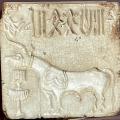
The unicorn always has this object in front of it. There are at least five theories about this object. Mackay and Marshall thought it was the feeding trough or "manger" still seen in Sindh today. There is work connecting it to contemporary offering … >
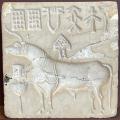
Published in Vats 1940, plate XCII, No 296. The published version is the other way up. Title: Seal Found in Mound AB. Vats noted the provenance as: “In squares P 18/11 and 12 are the remains of an oblong room measuring 14 by 12 ft. internal… >
An incredibly well-preserved seal. The second image [above] is the sealing made from this seal, as shown in Shah, S. G. M. and A. Parpola, Corpus of Indus Seals and Inscriptions. 2. Collections in Pakistan (p. 16). On unicorn seals in general, th… >
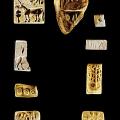
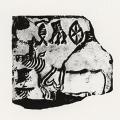
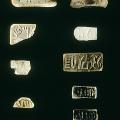
A collection of inscribed objects found along the main street leading to the southern gateway of Mound E at Harappa. The fragmentary seal on the left is the earliest seal found to date, and depicts a bovine carved in a very archaic style. At the top… >
In addition to any commercial functions, the seal may also have designated a position of authority. The motif on the seal could also have been an amulet or charm. The seal itself was probably worn around the neck, with a chord passed through the … >
It is worth noting that in these earlier reports, seals were photographed in their original form. In Vats' monograph, photographs of the stamp seals were mostly taken from plaster casts of the originals, i.e. these photographs were the reverse of th… >
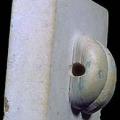
Another extremely well-preserved seal, about which Dr. Mark writes (Ancient Cities, p. 189): "Large square unicorn seal with perforated boss on the back. A relatively long inscription of eight symbols runs along the top of the seal. The elongated… >
A collection of seals and tablets from a single house along the main street leading to the southern gateway of Mound E at Harappa. The association of these different types of objects together in one house show that some people, possibly merchants, w… >