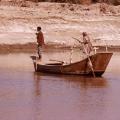
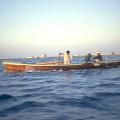
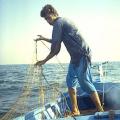
Long gill nets of various sizes and configurations are set in areas along the coast. The type of net and the fishing grounds vary in accordance to season and type of fish that is being caught. Sting-rays are caught with very large-meshed nets in sha… >
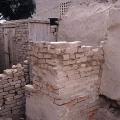
The surviving town of Harappa provides many clues to ancient times. No doors have been found in excavations, but terracotta toys and other evidence suggest that ancient doorways were much like this one in modern Harappa, down to the lock or fastener… >
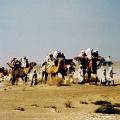
Desert nomads of Cholistan in Punjab come to the annual festival at Channan Pir. They bring with them produce from their herds and minerals from the desert. Similar relationships probably existed between ancient Indus urban centers and nomadic commu… >
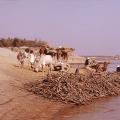
Although long distance travel on the Indus River is no longer feasible due to the construction of barrages and dams, local trade of firewood and other daily necessities is still moved up and down or across the river. Camels carrying grain wait for t… >
Fishing usually begins early in the morning. Fisherfolk often leave well before the sun rises and return in the early afternoon. After eating lunch and napping, the men would gather to repair boats and nets as well as gossip amongst themselves and c… >
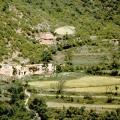
Terraced fields along the Margalla hills north of Islamabad, represent the adaptive strategy of agriculture in different parts of the greater Indus Valley. Similar agricultural villages were established by Indus settlers in Baluchistan and the north… >
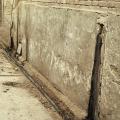
Latrines located inside a courtyard of modern Harappa town have drains that fall directly into the open street drain. (See Indus 1, Slide 12 for an ancient bathing platform.) >
Nets are drawn up by hand along the side of the boat. It is very strenuous and tiring work that can take up to 60 to 90 minutes per net. Often the nets catch on rocks and are broken free only through the use of intense pulling by the team or through… >