After completing the excavation, the trenches were filled with sifted sediment and the "granary" structures were covered with a protective plaster made of clay and straw. >
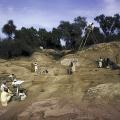
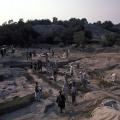
REM Granary View looking south along the western edge of the REM Granary excavations. Multiple rooms were exposed erodiing from this part of the mound. They would have been aligned along a large north-south street and drain that was revealed duri… >
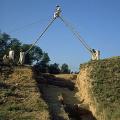
Richard Meadow photographs the excavations in Trench 54 from a tall bamboo ladder that is supported by four ropes. This ladder can be situated over any area of the excavations to obtain near vertical views of rooms and artifact scatters. >
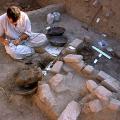
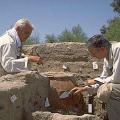
William Belcher has just removed charcoal for archaeobotanical analysis and radiocarbon dating from one of the hearths (image 35) and is making out a label for the sample. >
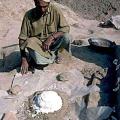
The pedestaled basketry impression was covered with plastic and a plaster jacket applied to hold the column together when the sediment was cut loose. >
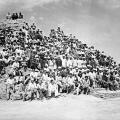
Stupa Area Group photo with Sir Mortimer Wheeler, along with other team members and the large staff of workers. Wheeler is third from left in front row. No.93B "1020 93B" penciled in back >
After mapping and photography, the fragile mud brick walls of Trench 54 are covered with a protective layer of burlap and sifted soil to form a sacrificial layer in which dissolved salts can dry and crystallize without damaging the ancient walls. Th… >
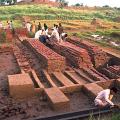

![Mohenjo-daro REM Granary Excavations [1176]](/sites/default/files/styles/square_thumbnail/public/slides/i-1176.jpg?itok=MMSC7WFJ "Mohenjo-daro REM Granary Excavations [1176]")