Home

Main navigation

  • home
  • slides
  • essays
  • articles
  • books
  • video
  • q & a
  • blog
Secondary menu
  • about us
    • scholars
    • privacy
    • support
    • image rights
    • credits
    • contact us
  • resources

Sir John Marshall was a prominent British archaeologist and scholar who focused on the archaeology India and the Indus Valley site - Mohenjo-daro.

Rectangular Seals

Photographed between 1922-27 and published in Sir John Marshall, Mohenjodaro and The Indus Civilization (1931). >

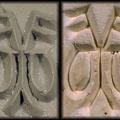
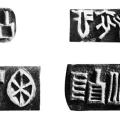
Terminal Sign

Iravatham Mahadevan believes that the terminal sign used here is actually a combination of two signs. The bottom part (figure carrying) denotes a bearer of office. The top represents a jar, which is related to priestly duties in early historical Ind… >

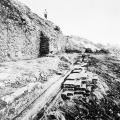
Eastern retaining wall of Great Platform, with drains near its foot

Photographed between 1922-27 and published in Sir John Marshall, Mohenjodaro and The Indus Civilization (1931). >

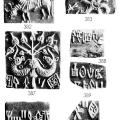
Mythological Creatures and Plant Forms Seals

[Original 1931 text] "The three-headed beast on seal 382 appears to be a composite of three animals. The heads and horns seem to be those of antelopes and the body of a unicorn. The heads have been joined to the body very carefully. One is eating, t… >

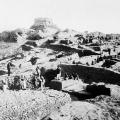
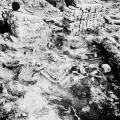
Southern Buildings in course of excavation, from south-west

[Original 1931 text] "A considerable number of buildings separated from each other by streets and lanes have been excavated in the southern portion of the stupa mound . . .. The terrain here descends more or less abruptly to the south, where a narro… >

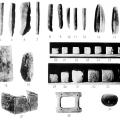
Indus Household objects. Flint Implements, Weights

  • Indus Household objects. Flint Implements, Weights

[Original 1931 text] "The flint implements found at Mohenjo-daro are of the simplest description, most of them being long flakes that were probably used for cutting up meat and for other household purposes. Both the flakes and cores from which they … >

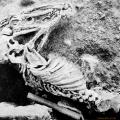
Portion of skeleton found above southern wall of Room 74, House V

[Original 1931 text] On 29th December, 1925, 1 foot below the surface, part of a skeleton was discovered above what proved later to be the southern wall of Room 74 of House V, Section B. All below the pelvis, save the head of the right femur, which … >

The Excavations of Mohenjo-daro from the air 1920s

Photographed between 1922-27 and published in Sir John Marshall, Mohenjo-daro and The Indus Civilization (1931) >

Group of skeletons in Room 74, House V.

  • Group of skeletons in Room 74, House V.

Photographed between 1922-27 and published in Sir John Marshall, Mohenjodaro and The Indus Civilization (1931). >

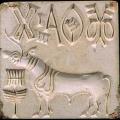
The Unicorn Seal

This seal from Mohenjo-daro measures 29 mm (1.14) inches on each side and is made of fired steatite. Steatite is an easily carved soft stone that becomes hard after firing. On the top are four "pictographs" of an as yet undeciphered Indus script, on… >

Pagination

  • First page
  • Previous page
  • Page 1
  • Page 2
  • Page 3
  • Page 4
  • Next page
  • Last page
© Harappa.com 1995-2026 31