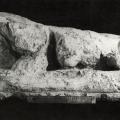
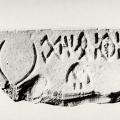
"Base of a terracotta image containing feet of a deity with an uncertain, figure between them (B 54)." - Daya Ram Sahni, Annual Progress Report of the Archaeological Survey [of India], Hindu and Buddhist Monuments, Northern Circle for the Yea…>
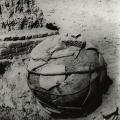
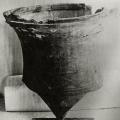
Earthen jar found in Trench A (f). The description of the duplicate photo 40: Large earthen jar (A) of 21 found in western portion of Tr. A (f). The contents of a large and broken jar comprise small terracotta vessels, of which two look, more … >
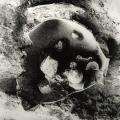
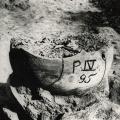
Earthen jar, A (a) in trench A (a) “near the platform of chiselled bricks.” Remains of a jar, crushed, or broken, with field number P IV 95. The field number of jar suggests that this was from Pit IV, which is on Mound AB. However, Sahni excav… >
There are two photographs of the painted neck of an oval jar (A442) discovered in Mound F. They are taken from slightly different angles to capture details of the rim, curvature and the painted motifs. These details would be valuable as the archaeol… >
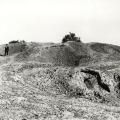
"In the northern portion of this mound, Rai Bahadur Daya Ram Sahni excavated a considerable area (B) in the years 1920-21, 1923-24 and 1924-25. He began by sinking a trial trench 55 ft. long by 20 ft. wide, a little to the west of and parallel to th… >
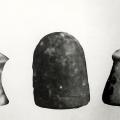
"Objects used for games are not many. Those that may be said to be unmistakable are balls and marbles in stone, shell, faience and pottery; dice of the same materials except shell; and some gamesmen of tetrahedral or chessman shape, the latter hardly distinguishable from baetyls." >