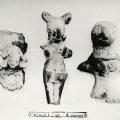
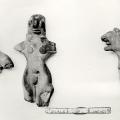
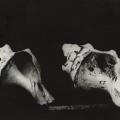
Three terracotta figurines, female. All broken. A field number ending in 708 is marked on the head-dress of the one on the left, of which only the bust remains. >
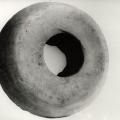
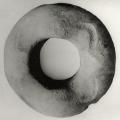
Round stone ring reclaimed from possession of Harappa Police Thana Published in Vats 1940, Vol. II, Plate CXVII, 3. Title of Plate “Miscellaneous Cult and Household Objects” Vats mentioned the find of this ring stone in relation to excavat… >
This photograph of a jar illustrated in the center of Trench A(e) (Vats 1947, Plate IX), shows the base of a large jar that was probably used as a latrine. There are two smaller vessels that were probably used for pouring water after using the toil… >
"Most of these fragments were, however, easily identified as parts of the undulating rings, three complete specimens of which are lying on the site. The precise purpose of these rings is not yet ascertainable, and I have not seen anything like them … >
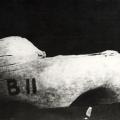
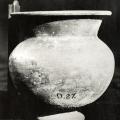
There are several photographs of the earthen jar D27 that was found on Mound A-B. This was one of the earliest complete pots discovered at Harappa. That this pot was one of the images published by Marshall in his announcement in the Illustrated Lond… >
Two terracotta male figurines, nude. Left: Male figurine, nude, published in Vats 1940 (Vo. II), no. 21. Find no. A. 19, 1.7 in high “found at a depth of 2 ft. 6 in. b.s., in Mound F, Great Granary Area, Stratum I” (Vats 1940, p. 296) Vats… >
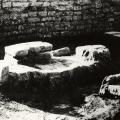
Published in ARASI 1924-25, Plate XXIV (b). Title: Harappa: Mound F, A burial structure resembling a modern samadhi unearthed in Trench A (E) Describing the finds of this burial structure Daya Ram Sahni noted: "My excavations at Harappa … >
Published ARASI 1924-25, Plate XXVI (d). Title: ‘Harappa: Mound A Large sized Ring of Polished Stone’ Despite the object label of Pl. XXVI d, which notes the provenance as Harappa, this plate is documented in ARASI 1924-25 as a … >
Harappan shell working was carried out in many areas of the site using a wide range of marine shell species. These two examples of Fasciolaria trapezium, have been chipped to remove pieces of the outer shell that may have been used for making shell … >
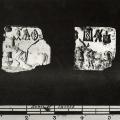
The seals are published as Plate XIX, 8 and 9 in Sahni's report (Daya Ram Sahni, 1926. Annual Report Of The Archaeological Survey Of India 1923-24, pg 54.), but they are not individually identified in the text. The seal on the right (Pl. XI… >