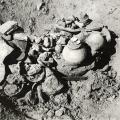
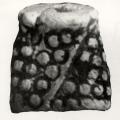
Published in ARASI 1924-25, Plate XXIV (d). Title: ‘Harappa: Mound F, Contents of a Cinerary Jar (A (F) 317)’ Sahni described the area this was found as: “between the trench “Ae” … and the long trench A, a large rectangular cutting A(f)… >
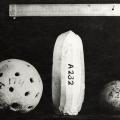
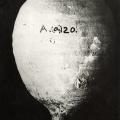
"Balls in terracotta, stone, shell, and faience have been found universally at Harappa, those in terracotta being recovered in specially large numbers." >
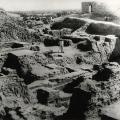
"In order to trace some more walls of the two blocks of the Great Granary Mr. Sahni made a few stray extensions about the centre of Trench A both towards the east and west. In the former direction, that part which lies to the north of corridor e was… >
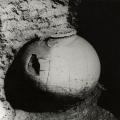
Large Jar embedded in the south site of a small wall in front of a tiny cell near wall No. 17 in A (b). Photograph of a jar insitu. Sahni excavated a long Trench A in Mound F, which Vats reported in detail: “In order to trace some… >
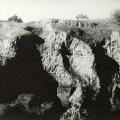
Published in ARASI 1924-25, Plate XXV (b). Title: ‘Harappa: Mound B, A large brick building’. “Stratum No. 5 was occupied by a brick building of considerable dimension (Plate XXV a [this should be b]) which came to light 24’ below the hi… >
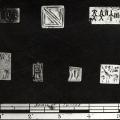
The seals are numbered 1-7 from top left to bottom right. Seal 1: Mound A-B Sahni writes: "The seventh stratum will probably be found to be occupied by a building of considerable magnitude though so far only a portion of it… >
Trench A(b) is one of eastward trenches cut by Daya Ram Sahni in Mound F. "In order to trace some more walls of the two blocks of of the Great Granary Mr. Sahni made a few stray extensions about the centre of Trench A both towards the east and we… >
"In order to trace some more walls of the two blocks of the Great Granary Mr. Sahni made a few stray extensions about the centre of Trench A both towards the east and west. In the former direction, that part which lies to the north of corridor e was… >
"This object is actually part of a composite figurine of a gharial, the narrow snouted crocodile that used to live in the local rivers and ox-bow lakes. The animal is commonly depicted on terracotta and steatite tablets and on intaglio seals. See dr… >
These three seals all have the same unicorn animal motif and a ritual container placed below the head of the animal. The script location and carving styles indicate that the seals belong to different time periods. The right hand seal probably dates … >