Maps

Ancient Indus civilization maps including sitemaps.

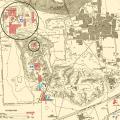
This map shows both Mound F and Mound AB, in grey circles, within the context of the larger site excavations. Objects that follow were found in both or either of these two areas and which in particular may not be available in the archival record. … >

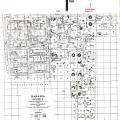
Plan of Vat's excavations showing circular platforms. In some cases remnants of the baked brick walls that probably surrounded each platform can be seen on the plan, although earlier and later walls are also shown. From M.S. Vats (1940) Excavations … >

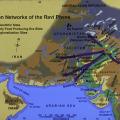
Arrows extend from Harappa to likely source areas for raw materials such as agate, lapis lazuli, steatite, marine shell and copper. These raw materials were transformed into ornaments and tools at Harappa for local trade. The Ravi Phase denotes a… >

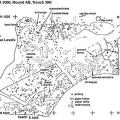
This plan shows concentrations of bead manufacturing debris on several superimposed Ravi phase floor levels that indicate the positions of actual work areas. >

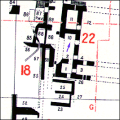
Mackay writes about the large building in Block 22 (p. 152): "At the floor level of the Late II Phase this building measured 51 feet 3 inches, North-South, by 56 ft. long at the north and about 54 feet 9 ins. at the south. The thickness of its wa… >

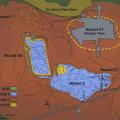
The excavation map is defined by the Harappa Archaeological Research Project, and shows the extent of occupation phases during different chronological phases. The major excavation areas featured in this presentation are Trenches 38, 39 and 42 on Mou… >

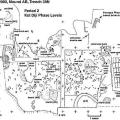
Plan view of Trench 39N Kot Diji phase levels (Period 2: 2800-2600 BC) with locations noted for major finds: sealing, elephant seal, inscribed sherds, limestone weight. This area appears to have been a street running between mud-brick structures. Ha… >