

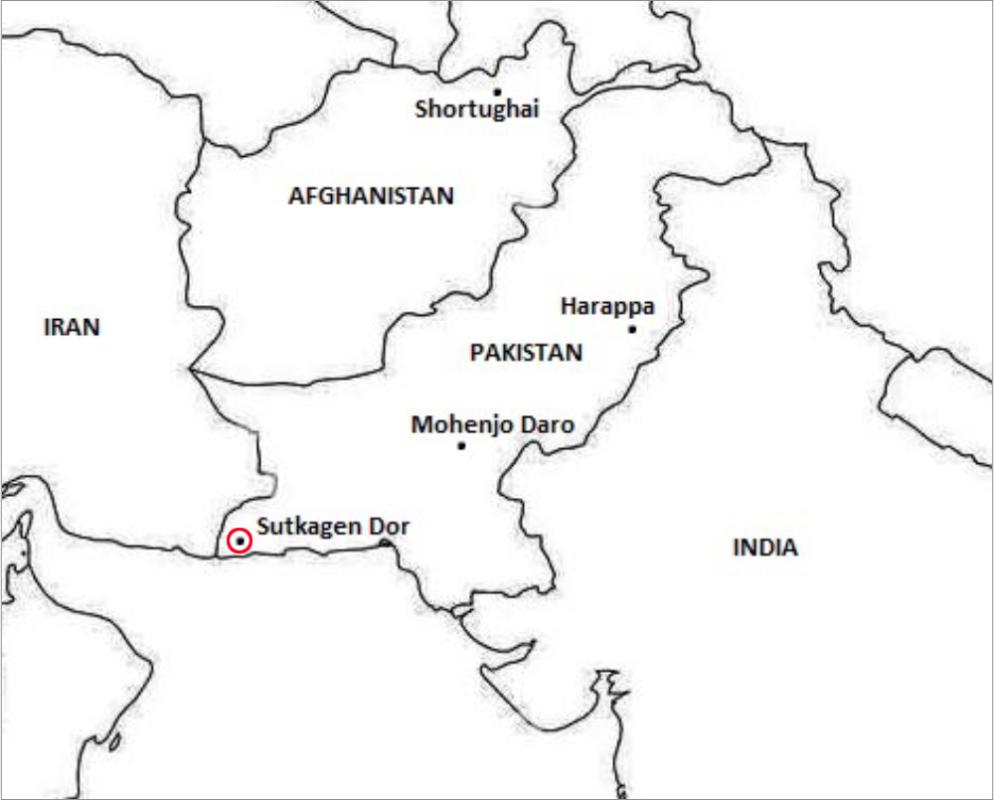
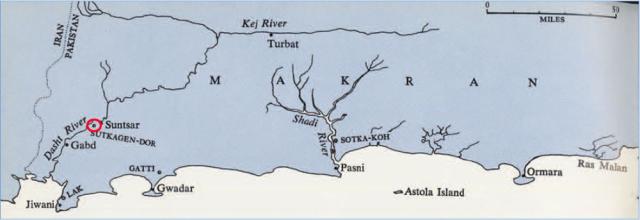
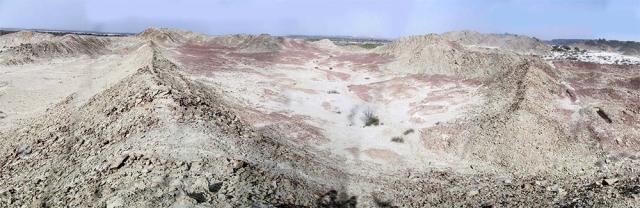
About 60 kilometers north-west of Gwadar, close to the Makran Militia post at Suntsar, lie the ruins of an enigmatic settlement that goes by the present-day appellation of Sutkagen Dor (burnt mound). Dasht River which flows nearby, discharges into the Arabian Sea next to the Pak-Iran border. A 400-km long stretch of low sedimentary rock running east-west, known as the Makran Coastal Range, terminates at Suntsar. The present distance of the hill range from the coast varies from 0-20 km. The hill range rises to 2,100 meters at places. The coastal morphology of the Makran coast is determined by the interaction between plate tectonics, differential soil erosion between hard and soft rock, and coastal sedimentation which permits accumulation of extensive sand deposits. Due to these factors the coast has shifted seaward by about 20-km in 4,000 years, at rates of up to 5 meters per year (Gharibreza, 2016; Normand et al, 2019). This rate indicates that the coast must have been half way between the present-day mouth of Dasht River and the Sutkagen Dor site. The harsh climate, infertile soil and forbidding desolation of the region continue to be unfavourable factors for permanent human habitation.
Various Explorations
Sutkagen Dor came to light when a report on the archaeological explorations in Makran was first published in 1877 by Major Edward Mockler, the British political officer stationed at Gwadar in the 1870s. Mockler’s report was written much before the Indus Civilisation had been discovered, so the cultural affinity, as well as the age of the settlement could not be determined. Mockler was one of several British officers posted successively to Makran, “to ascertain the nature and resources of those countries through which an invading European army might advance toward Hindoostan.” It may be recalled that much of nineteenth century saw Makran as vital to the astute efforts by the British to keep the Europeans – essentially French and Russians – at bay.
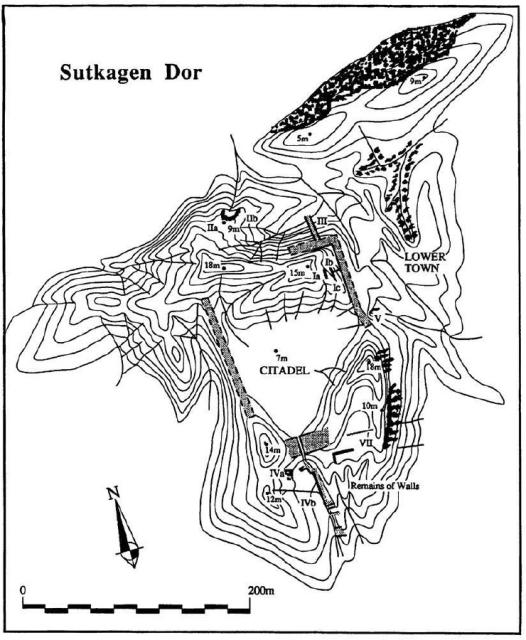
The famous British explorer Aurel Stein conducted an archaeological survey of Makran in 1931, when reports about the discoveries at Mohenjo Daro and Harappa were appearing. Stein had learnt about the discovery of Indus Valley Civilisation (IVC) but he had not seen the evidence, and did not mention any linkage between IVC and the Makran sites. Stein’s exploration report of Sutkagen Dor, which included topographic plan of the site, as well as images of pottery and other artifacts, indicated that it was a significant outpost of the IVC.
Spurred by Stein’s report of three decades earlier, George Dales, who had recently earned a PhD in archaeology from the University of Pennsylvania, decided on an expedition to Makran. Dales cobbled up a team consisting of Cuyler Young, a fellow graduate of the same university, and Dales’ wife Barbara. The representative of Pakistan’s Department of Archaeology and Museums was Rafique Mughal. The expedition was finally launched in 1960 after bureaucratic delays and sorting of logistics issues. A two week stay at the site was planned. Salient findings of the exploration, including digging of trenches at four places, are as follows:
- The site was divided into what Dales termed as the ‘citadel’ and a ‘lower town.’
- The oblong citadel was sited on a large mud brick platform. Dales estimated the area to be as large as ‘four football fields’ or approximately 2.5 hectares.
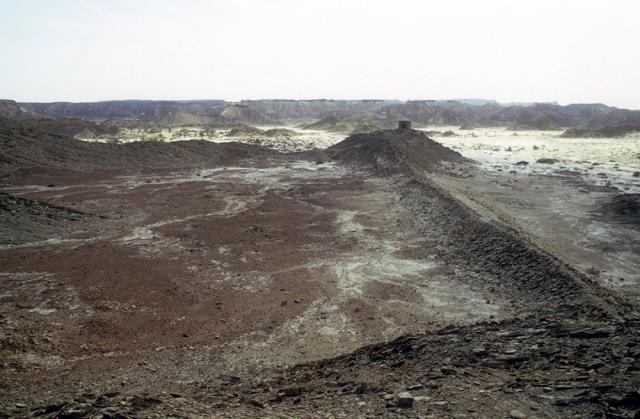
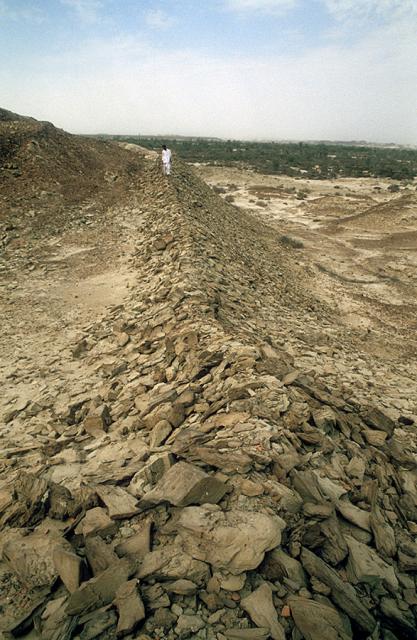
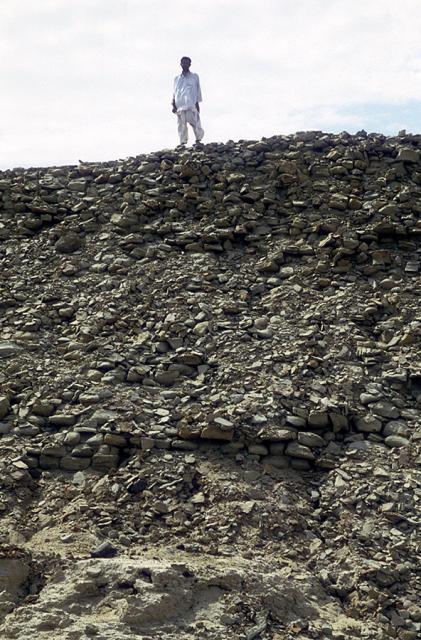
- The citadel was protected by stone walls on the western and eastern sides, and there were traces of stone bastions or towers at mid-points along these walls. Only the foundations of walls were visible.
- The citadel was protected by stone walls on the western and eastern sides, and there were traces of stone bastions or towers at mid-points along these walls. Only the foundations of walls were visible.
- The northern and southern sides were naturally protected by rocky terrain 15-18 meters high at places.
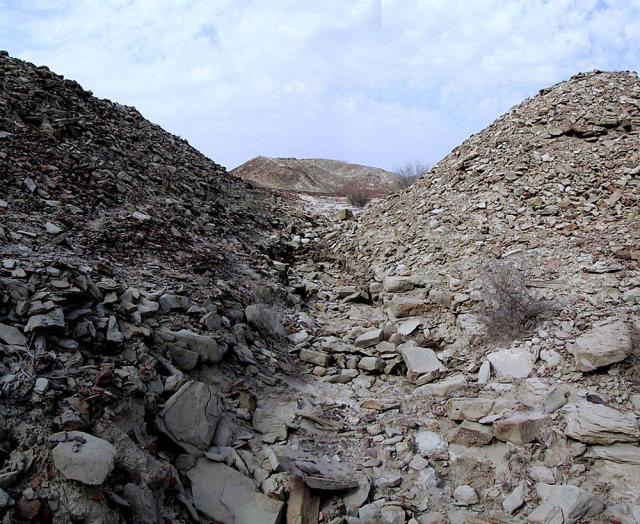
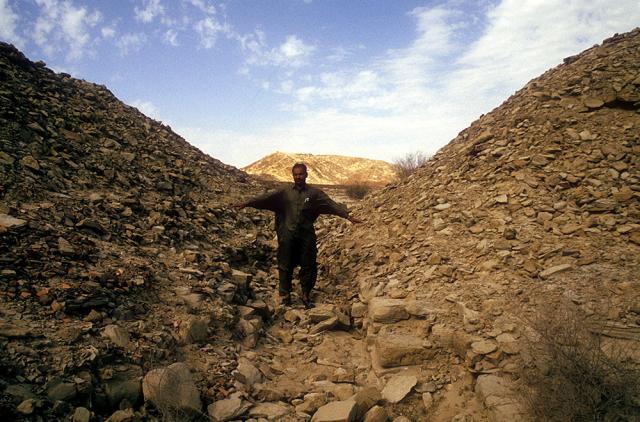
- Entrance to the citadel was through a sizeable ‘gateway’ on the south-western side. 12-meter wide stone structures on either side formed the gateway, with a narrow passage of about 1.75 meters in width opening into the citadel.
- There was evidence of mud brick structures on several rock outcrops.
- Occupational debris on the site was found to be up to 3 meters thick.
- Excavations revealed evidence of three major building phases.
- There was evidence of stone foundations of regularly laid out structures.
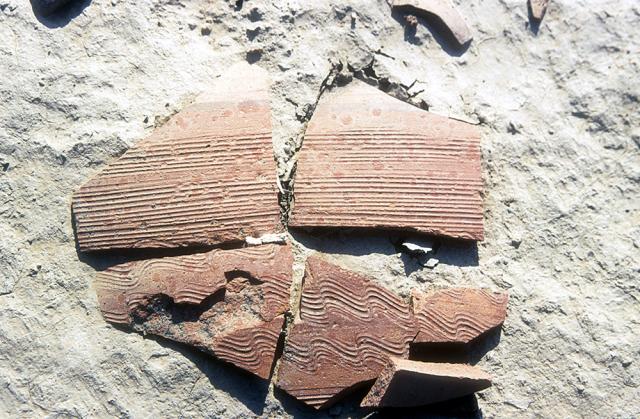
- The citadel area was littered with plain and red slipped pottery sherds of Mature Harappan design, while sherds in the lower town were of Baloch tradition that was contemporaneous with Harappan.
- Use of mud brick was common, though there is also evidence of baked bricks in a few relic structures.
- Two rock outcrops in the north-eastern area were interconnected by an embankment of rounded river boulders. This may have been part of a peripheral wall to protect the lower parts of the site from floods.
In his report Dales observed that, “the incredible amount of alluvial buildup in the valley gives a misleading impression of the geographical situation four thousand years ago. Sutkagen Dor could well have been an actual port, or at least control point at or near the mouth of the Dasht River. In fact, certain features suggest that it may have been an island during Harappan times.” This observation appears somewhat contentious, as it presumes that the coast had retreated seaward by as much as 50-km in 4,000 years due to deposition of alluvium from the river. Dales’ certainty about Sutkagen Dor being the ‘port’ (harbour) does not seem absolute however, as he also offers the possibility of it being a ‘control point’ (trading post?). If indeed Sutkagen Dor was just a trading post, the harbour could have been further downstream at the ancient mouth of the river, near the present day village of Gabd (see Makran map on page 1).
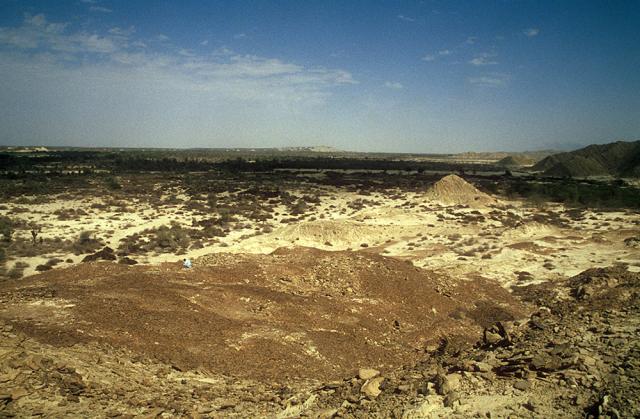
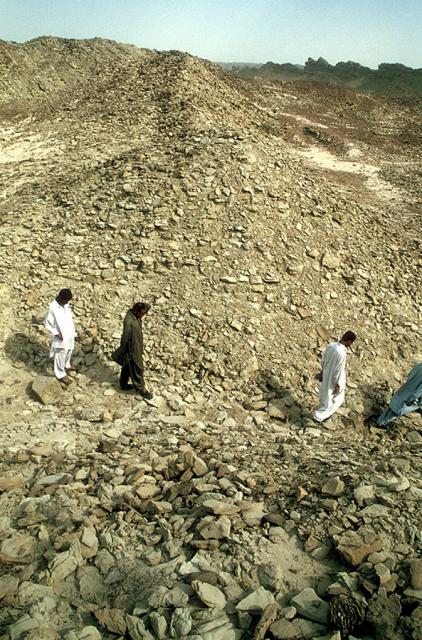
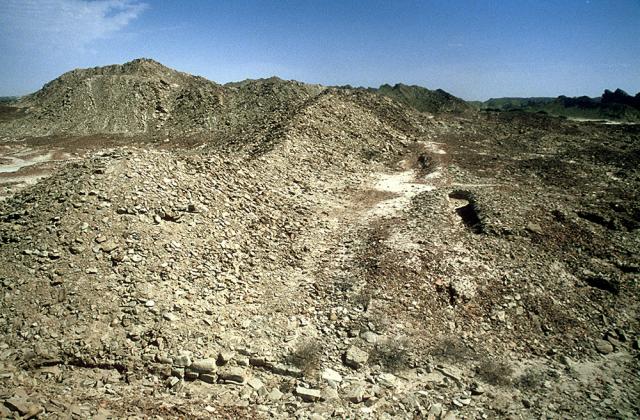
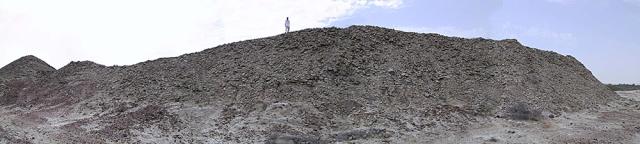
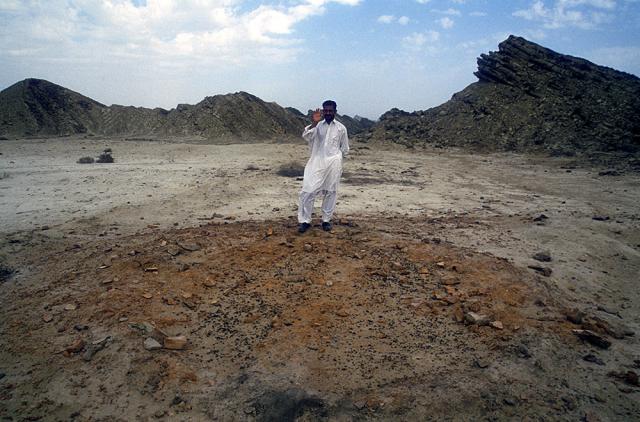
The site of Sutkagen Dor has been briefly visited in 2021 by Randall Law, an American scholar focusing on natural resources and trade networks of Harappa and Mohenjo Daro. He photographed the site extensively, which gives a fair idea of the walled fortifications that secured the all-important citadel. Panoramic views highlight the location of this trading post in the harsh terain of Makran. Some of Law’s observations are as follows:
- There is evidence of a large brick kiln about 300 meters south-west of the site. Fragments of bricks of Harappan dimensions were strewn nearby.
- Very little painted pottery was found at the site.
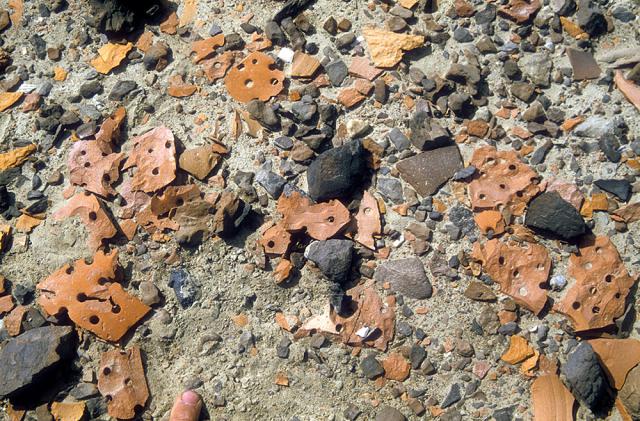
- Items found on the surface included perforated pottery pieces, copper fragments, chert blades, shell as well as painted terra cotta bangles, and lots of red and green jasper.
The choice of a trading post at the present location of Sutkagen Dor was ostensibly dictated by the proximity of Dasht River as a fresh water source. Additionally, siting of the post amidst hillocks – with any gaps covered by fortified walls – offered protection against intruders in the wilderness of Makran. After all, overseas trade involved storage of expensive goods while in transit to and from upcountry. This pattern of siting next to a river, with natural protection provided by hillocks, is also seen at the Harappan coastal site of Sotka Koh near Pasni.
As at Sotka Koh, the trading post at Sutkagen Dor is marked by potsherds strewn all over the site. Ostensibly, pottery served the needs of the residents at the site, but more importantly, a local pottery industry was necessary for packaging of perishable goods, considering the role of the site as a trading post. Fuel to fire the pottery-making kilns as well as domestic hearths most likely consisted of shrubbery and cow dung, as the soil and weather of Makran coastal region are not conducive to forestation.
In their reports, Dales and Law have not mentioned about any evidence of toys, figurines and jewelry, which indicates a rather utilitarian environment. It is however possible that these items may have been scavenged over the millennia. Further excavation is bound to reveal at least some elements that might mitigate the seeming socio-cultural isolation of Sutkagen Dor.
Why Two Trading Posts?
Questions remain with regard to the establishment of two coastal trading posts, viz Sutkagen Dor and Sotka Koh located within 150-km of each other.
Could it be that the site established earlier was abandoned due to excessive coastal sedimentation, or a catastrophic earthquake, and a new post was established thereafter? The relatively deep inland location of Sutkagen Dor suggests an altogether different proposition: that it was not a trading post for overseas trade with Mesopotamia, but was established for exploitation of mineral and metal resources of Balochistan. Agate, carnelian, jasper, and steatite, along with copper, were some of the resources available and accessible in the region, without resort to sea-faring. The model of the IVC trading post at Shortughai in northern Afghanistan, established for prospecting lapis lazuli and tin, was an efficacious precedent. The eminent archaeologist and IVC scholar Jonathan Kenoyer observes that, "Harappans had an entrepreneurial spirit driven by access to several sources of raw materials. If you had entrepreneurial go-get-‘em, and you had a new resource, you could make a million in Harappa."
In the absence of more extensive excavations at Sutkagen Dor, it is open to conjecture if it was an outpost for managing sea trade with Mesopotamia, or was founded exclusively to exploit the mineral resources of Balochistan. What is clear is that the Harappans were entrepreneurs par excellence, and long distances over land or sea were no barriers for them.
Picture Credits – Acknowledgement is made to Dr Randall W Law for all pictures provided by him.
Bibliography – Explorations on the Makran Coast, Pakistan. A Search for Paradise by George E Dales and Carl P Lipo.
Mail to: ksrtfl at gmail dot com