[Original text, 1931] It should, however, be borne in mind that these animals may perhaps represent the dieties of provinces, in exactly the same way as do the 'nome' animals of Egypt, all of which are commonly shown on standards very similar to the… >
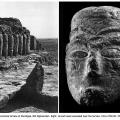
One of the most exciting developments in recent times has been new chronologies of Mundigak, interesting because they put the palace and head in this picture before the height of the ancient Indus civilization. Here are the dates from radio… >
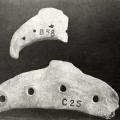
Another class of objects, even if incomplete, were also immediately familiar to Day Ram Sahni: "(16) An earthen instrument for making twines. It is a curved shaped piece with five holes, one of which is broken off. Each hole received a strand, al… >
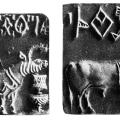
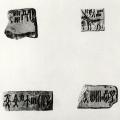
These steatite seals are depicted in Sahni's report for 1923-24, although only only is described and its location provided. The four seals are listed clockwise from the top left. Seal 1: (Sahni Pl XIX, 13)Seal 2: M…>
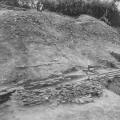
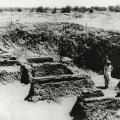
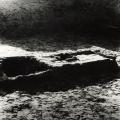
Pit IV showing excavated structures from N.W. Possibly of this structure after its excavation, Sahni reported that the “fourth or the northernmost pit revealed the remains of several structures, the best preserved one of which is a rectangular c… >
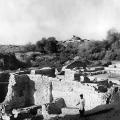
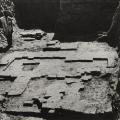
A slightly different photograph of the structure, not so close as in this photograph is published in ARASI 1924-25, Plate XXV (d). Title: ‘Harappa: Mound B, A Double Burial Structure’ Sahni noted: “On the next or third stratum from the t… >
"In the northern portion of this mound, Rai Bahadur Daya Ram Sahni excavated a considerable area (B) in the years 1920-21, 1923-24 and 1924-25. He began by sinking a trial trench 55 ft. long by 20 ft. wide, a little to the west of and parallel to th… >