Home

Main navigation

  • home
  • slides
  • essays
  • articles
  • books
  • video
  • q & a
  • blog
Secondary menu
  • about us
    • scholars
    • privacy
    • support
    • image rights
    • credits
    • contact us
  • resources

Tablets

Ancient Indus civilization tablets.

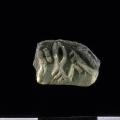
Faience tablet

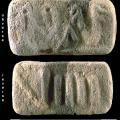
Faience tablet (H2001-5082/2920-02) made from two colors of faience was found eroding from the Trench 54 South workshop area. Identical tablets made from two colors of faience were recovered in Area J, at the south end of Mound AB, in the excavation… >

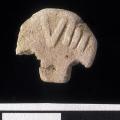
Broken steatite mold

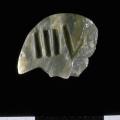
Broken steatite mold carved into a unique fan-shape. (H2001-5069/2913-02). This mold was probably used to make a faience tablet that was found on the eroded slope to the south of the workshop in Trench 54 South (Slide 65). >

Molded faience tablet

Fan-shaped molded faience tablet found on the eroded slope south of the Trench 54 South workshop. It was probably made using the steatite mold found in the workshop (Slide 64). >

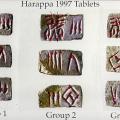
Stroke direction

The red arrows indicate the direction of strokes used to incise each group of tablets. >

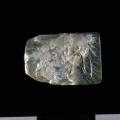
Unfinished tablet

Unfinished and broken incised steatite tablet (H2001-5087/2934-01) found in the debris on the workshop floor in Trench 54 South. >

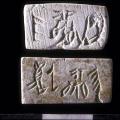
Two inscribed tablets

These two inscribed tablets (c. 2300 BCE) have the same inscription, but it was written in opposite directions. What is even more interesting is that the top tablet is incised with the same "handwriting" as the Group 2 tablets described in (59). The… >

Unique two colored tablet

This uniquely shaped tablet (H2001-5090/2913-09), also made with two colors of faience, has an inscription similar to that seen on the previous slide (67). This tablet was found inside the workshop in Trench 54 South. >

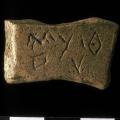
Inscribed sherd, Harappa Phase

Most inscribed sherds are part of larger vessels that were inscribed and then broken. This object (c. 2300 BCE) was inscribed as a sherd. It is clear that broken sherds were occasionally used as a form of "scrap paper" to send notes or serve as temp… >

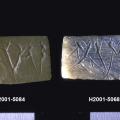
Inscribed steatite tablets

Inscribed steatite tablets made from two different colors of steatite have the same inscription. The sloppy nature of the inscription may be the reason why these tablets were discarded. Both tablets, incised on one side only, were found in the same … >

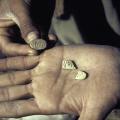
Terra cotta seal and faience tablets

High concentrations of objects such as these terra cotta seal and faience tablets indicate the significance of this part of the site (Trench 54 area) for obtaining further insights on the manufacture and use of inscribed pieces. >

Pagination

  • Page 1
  • Page 2
  • Page 3
  • Page 4
  • Page 5
  • Next page
  • Last page
© Harappa.com 1995-2026 31