Home

Main navigation

  • home
  • slides
  • essays
  • articles
  • books
  • video
  • q & a
  • blog
Secondary menu
  • about us
    • scholars
    • privacy
    • support
    • image rights
    • credits
    • contact us
  • resources

Ravi Phase

Ravi Phase objects, motifs and images. The pre-Indus Ravi or Hakra Phase dates to approximately 3300-2800 BCE.

Ravi Phase Motifs

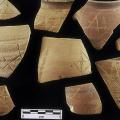
Whereas many other motifs of the Ravi Phase (Period 1) disappear in the later Kot Diji Phase (Period 2), the intersecting circle and fish scale motifs continued to be used, but they came to be executed in black paint on a red slip. In this image the… >

Excavating Ravi phase bead debris

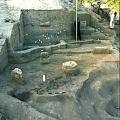
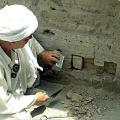
J. Mark Kenoyer assisted by Peter Eltsov carefully uncover and mark Ravi phase bead manufacturing debris in preparation for mapping and photography. >

Ravi Phase Pot

This Ravi Phase hand-built pot with polychrome design was found next to the one with intersecting circles illustrated earlier (11). The net and bird motifs are found at other sites to the northwest in Bannu district, but they do not continue into th… >

Ravi phase microdebitage

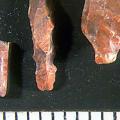
Ravi phase bead manufacturing debris includes extremely fine microdebitage as well as flakes and drills (marked with the green flag). >

Ravi Phase Pedestaled vessel

Pedestaled vessels such as this hand-built painted bowl-on-stand of the Ravi Phase appear to be the predecessors of a vessel form that becomes more common during the later Kot Diji and Harappa Phases. >

Ravi phase microdebitage

After wet screening, the Ravi phase microdebitage, larger flakes, broken drills, and even microbeads are sorted according to type of artifact and kind and color of stone. >

Textile Evidence

The earliest evidence for normal weave textiles at Harappa is found in this impression on a Ravi Phase bead from Harappa, dating to around 3300 BCE. This fragment is only 1 cm long. Normal weave denotes interlacing single threads (one thread over/un… >

Ravi phase steatite microbeads

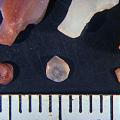
Tiny steatite microbeads (less than 1mm in diameter) such as those seen here were probably perforated with a sharpened copper wire, while stone drills with larger tips were used for carnelian, lapis, and amazonite beads. >

Ravi Phase beads

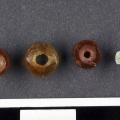
These beads from the Ravi Phase (3300-2800 BCE) at Harappa have been made from carnelian and amazonite (right hand bead). The raw material used to make these beads was brought to the site from source areas probably in Gujarat, over 900 km to the sou… >

Ravi phase raw materials

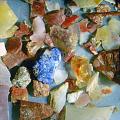
Flakes of various shades of agate, carnelian, jasper, chert, and lapis lazuli indicate the range of raw materials being processed in this part of Harappa during the Ravi phase. All of these raw materials were brought to the site from distant res… >

Pagination

  • Page 1
  • Page 2
  • Page 3
  • Page 4
  • Next page
  • Last page
© Harappa.com 1995-2026 31