Home

Main navigation

  • home
  • slides
  • essays
  • articles
  • books
  • video
  • q & a
  • blog
Secondary menu
  • about us
    • scholars
    • privacy
    • support
    • image rights
    • credits
    • contact us
  • resources

Ravi Phase

Ravi Phase objects, motifs and images. The pre-Indus Ravi or Hakra Phase dates to approximately 3300-2800 BCE.

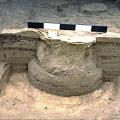
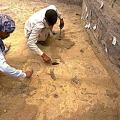
Outlining a Ravi phase storage pit

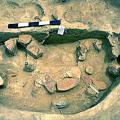
Each Ravi phase stratigraphic layer was identified and excavated, and the many rodent holes, obvious both in the exposed area and in the section, were isolated. Here delicate trowel work has revealed the circular outlines of the top of a storage pit. >

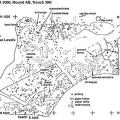
Mound AB, Trench 39N bead debris

This plan shows concentrations of bead manufacturing debris on several superimposed Ravi phase floor levels that indicate the positions of actual work areas. >

Ravi phase pit

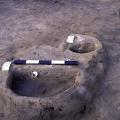
Normally in archaeology pits are emptied before earlier surrounding layers are excavated. In this case, however, in order to expose vertical sections of both the Ravi phase pit and of the earlier deposits, excavation of the floors around the pit… >

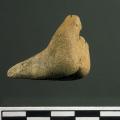
Early Harappan stylized female figurine from Harappa

The earliest anthropomorphic figurines from Harappa thus far are from the Early Harappan (Ravi Phase, Period 1, and Kot Diji Phase, Period 2) levels. Among these are stylized seated female figurines with exaggerated buttocks and thighs and joined le… >

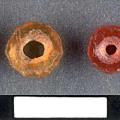
Ravi phase stone beads

Many broken and unfinished stone beads of carnelian (red-orange) and amazonite (blue-green) were found in the floor levels associated with the Ravi phase pits and hearths. (See also slide 119.) >

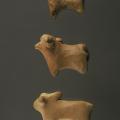
Three Early Harappan zebu figurines from Harappa

The earliest animal figurines from Harappa are Early Harappan (Ravi Phase, Period 1 and Kot Diji Phase, Period 2) zebu figurines. They are typically very small with joined legs and stylized humps. A few of these zebu figurines have holes through the… >

Ravi phase pit with trash and beads

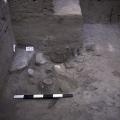
This large Ravi phase pit was filled with domestic trash and some bead making debris. The broken amazonite bead in (8) can be seen just above the scale inside the pit to the lower right of the image. >

Ravi Phase Pit

During the Ravi Phase (circa 3300-2800 BCE) the earliest inhabitants lived in huts made of wooden posts probably covered with reeds and clay. They stored grain and other foodstuffs in small bell shaped pits that were plastered with fine clay. The wh… >

Ravi phase beads

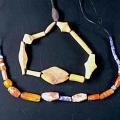
From different levels of the Ravi phase come these terracotta beads (center string) and hard stone beads made from carnelian, amazonite, and lapis lazuli. >

Ravi Phase Floor

Excavations in Trench 39 South 1996 uncovered the floor of a house dating to the Ravi Phase (circa 3100 BCE). Many complete vessels were found sitting on the floor along with broken necklaces, bone and stone tools, spindle whorls and bangles made of… >

Pagination

  • First page
  • Previous page
  • Page 1
  • Page 2
  • Page 3
  • Page 4
  • Next page
  • Last page
© Harappa.com 1995-2026 31