Home

Main navigation

  • home
  • slides
  • essays
  • articles
  • books
  • video
  • q & a
  • blog
Secondary menu
  • about us
    • scholars
    • privacy
    • support
    • image rights
    • credits
    • contact us
  • resources

Pottery

Ancient Indus civilization and earlier pottery.

UM Area, and Citadel Mound

  • Mohenjo-daro, UM Area, and Citadel Mound

The UM excavations conducted by Dr. G. F. Dales in 1964-65 exposed a massive mud brick platform on top of which were built numerous brick buildings separated by narrow lanes. The pottery excavated from this area was used to develop the most comprehe… >

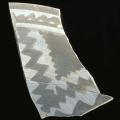
Faiz Mohammad Grey ware bowl, surface, section IA

Faiz Mohammad Grey ware bowl, surface, section IA (Niai Buthi). >

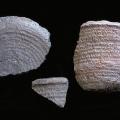
Basket-marked rims and base

Basket-marked rims and base, section A, surface (Bakkar Buthi). >

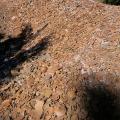
Discarded pottery sherds, Harappa

This pile represents sorted and discarded pottery sherds from continuing excavations at Harappa since 1985. >

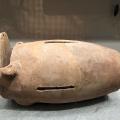
Mouse or Rat Trap

The caption at the Guimet identifies this as a rat trap, one of two similar ones found at the site. The sliding door on the left would have let a rat or perhaps another creature like a mouse in. Similar objects were found at Mohenjo-daro, also of te… >

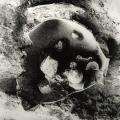
Earthen Jar Excavations

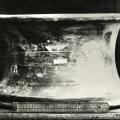
Earthen jar found in Trench A (f). The description of the duplicate photo 40: Large earthen jar (A) of 21 found in western portion of Tr. A (f). The contents of a large and broken jar comprise small terracotta vessels, of which two look, more … >

An earthenware ring

In his 1921 summary of pottery finds, Daya Ram Sahni called out "earthenware rests for dishes or pitchers" of which this one was considered the prime example (p. 13). "This type of ring stand was made to support large jars with narrow or rounded … >

Terra cotta discs

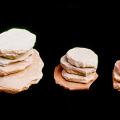
One of the games played by the children of the Indus cities may be represented by terra cotta discs found in graduated sizes. A game called "pittu" is played throughout Pakistan and northern India even today, with stacks of pottery discs and a ball … >

Inscribed mold fragment

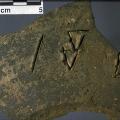
This fragment of a mold used for making large storage jars has three pre-firing graffiti signs. Such symbols when combined together may have served to indicate the name of the owner rather than just being abstract symbols. This piece dates to the en… >

The upturned rim of a jar

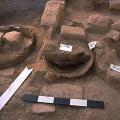
Also in a room encroaching onto the street were the upturned rim of a jar (on left) and two bases (center and right) that were used as hearths (Trench 41NE). The pottery base hearths could have been lifted and moved to different parts of the room th… >

Pagination

  • First page
  • Previous page
  • …
  • Page 7
  • Page 8
  • Page 9
  • Page 10
  • Page 11
  • Page 12
  • Page 13
  • Page 14
  • Page 15
  • Next page
  • Last page
© Harappa.com 1995-2026 31