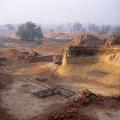
The central area of Mound A/AB was continuosly rebuilt in ancient times. Behind the curved wall is a well and below it what may have been a public bathing area. >
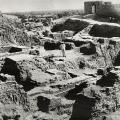
The man at the center of this image is likely to be Daya Ram Sahni [see closer view], but further work is needed to absolutely be certain of identity of the individuals in the photographs. In this overview looking from the southwest to the northe… >
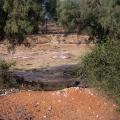
View of Harappa Mound AB Trench 39N from the North showing the earliest Ravi [Aspect of the Hakra] phase occupation levels (Period IA, ca. 3300 BC). These levels revealed traces of post molds from houses that were oriented N-S/E-W. >
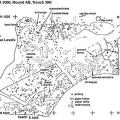
This plan shows concentrations of bead manufacturing debris on several superimposed Ravi phase floor levels that indicate the positions of actual work areas. >
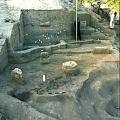
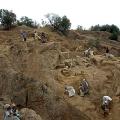
Harappa Mound AB, Trench 39N, showing the Kot Diji phase (Period 2, ca. 2800-2600 BC) and later levels during excavation. The surveying tripod is standing next to two Kot Diji phase kilns, and the rod is leaning against a later Harappa phase baked b… >
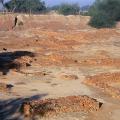
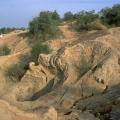
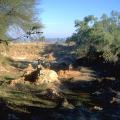
This landscape on the eastern side of Mound AB was the focus of excavations during the 1990s. Some of the earliest Indus seals and button seals were found in this area in 1996 and 1997, and it is providing numerous clues to the development of early … >
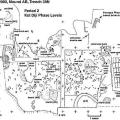
Plan view of Trench 39N Kot Diji phase levels (Period 2: 2800-2600 BC) with locations noted for major finds: sealing, elephant seal, inscribed sherds, limestone weight. This area appears to have been a street running between mud-brick structures. Ha… >