Home

Main navigation

  • home
  • slides
  • essays
  • articles
  • books
  • video
  • q & a
  • blog
Secondary menu
  • about us
    • scholars
    • privacy
    • support
    • image rights
    • credits
    • contact us
  • resources

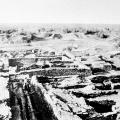
Mundigak Mound G "Temple"

The "Palace" was not the only monumental structure at Mundigak. There was also a "Temple" as Casal called it, on the adjacent Mound G and built along the same axis towards the latter part of Period IV [2900-2400 BCE]. It is another monumental buildi… >

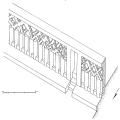
Southern Buildings Section. Street between Blocks 1 and 2 in foreground, from north

[Original 1931 text] "Blocks 1 and 2. - The total extent of this complex of buildings has not been settled, especially to the north-east (Block 2), as much excavation remains to be done. In the north-western section, however, as the plan will show, … >

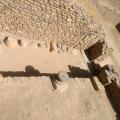
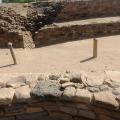
Southern Chamber, East Gate Dholavira

Pillar members in their original place in the Castle, Harappan period (c. 2500-1900 BCE). The east gate is quite elaborate with a large and elevated built-in chamber and a sunken passageway in front that connects to the stairs rising on the interior… >

Two Pillars, Dholavira

Two pillars associated with some type of entrance. It resembles a pillar shaped structure that is neatly polished. Two pillars could be a form of entry into a town, temple or a place of significance. >

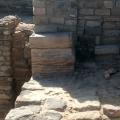
Basal slabs, Dholavira

A set of three rectangular basal slabs used to support the pillar column and mud bricks. The image shows finely crafted pillar base on which the composite pillar members were placed in order. These can be found in the upper part of the town or the c… >

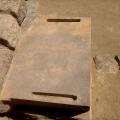
Rectangular basal slab, Dholavira

Top view of the rectangular basal slab with robust locking mechanism. Entire pillars rested on these superstructures [?]. These were used as a mounting point for side walls of chambers and to provide support to the roof structure. >

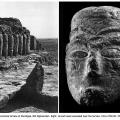
Monumental Terrace and Carved Head, Mundigak

One of the most exciting developments in recent times has been new chronologies of Mundigak, interesting because they put the palace and head in this picture before the height of the ancient Indus civilization. Here are the dates from radio… >

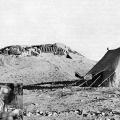
Mundigak Mound and Tent

"The whole district was known as Kar Karez and the track eventually took us through a village called Mundigak, the name Jean-Marie had borrowed for the mound. High mud-brick walls, square, flat-roofed houses, all skirting the grey gravel of the rive… >

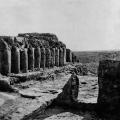
Mundigak Palace

A decade later, after excavating the pre-Indus site of Amri in Sindh, Jean-Marie Casal published the book La Civilisation d l'Indus et ses enigmes [The Indus Civilization and its Puzzles] (1969). In the section Mundigak becomes … >

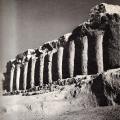
Mundigak Palace II

"We must therefore consider the ‘ramparts’ as monumental structures in much the same way as the ‘palace’ and ‘temple’ are, part of an overall monumentalisation of Mundigak that marks Period IV. The command of resources to build these structures, plu… >

Pagination

  • Page 1
  • Page 2
  • Next page
  • Last page
© Harappa.com 1995-2026 31