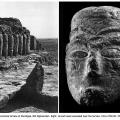
The "Palace" was not the only monumental structure at Mundigak. There was also a "Temple" as Casal called it, on the adjacent Mound G and built along the same axis towards the latter part of Period IV [2900-2400 BCE]. It is another monumental buildi… >
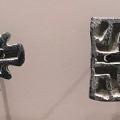
Compare the square seal on right with this button seal found at Harappa. These and the stone seals shown earlier are often called "compartmented" seals, with the backs being either open or closed. Sandro Salvatori in Bactria and Margiana Seals: … >
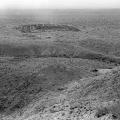
"Jean-Marie [Casal] pointed. 'There in front you see Siah Sang Pass—that is, Black Stone Pass.' "We had turned north towards a line of low, black mountains splashed with one white patch. As we drove into the black hills, a feeling of foreboding … >
Jean-Marie Casal writes in his book on the enigma of the Indus civilization, in a section called The last days of Mundigak and the problem of Baluchistan: "In Mundigak, the destruction of the first city, roughly at the same time, is probabl… >
One of the most exciting developments in recent times has been new chronologies of Mundigak, interesting because they put the palace and head in this picture before the height of the ancient Indus civilization. Here are the dates from radio… >
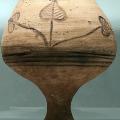
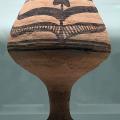
A painted goblet from Mundigak IV, dated from approximately 2500-2000 BCE. Note the stylized design accompanying the pipal leaf, also seen on the painted bowl opening this series. Bridget and Raymond Allchin describe "the emergence of a Baluchist… >
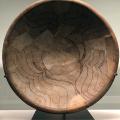
This painted bowl at the Guimet is from the Mundigak IV period, 2900-2400 BCE and involves some elaborate and very finely painted designs that could be an abstraction of the pipal leaf, sacred or of great reverence to Mundigak and Indus cultures. No… >
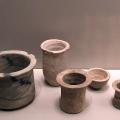
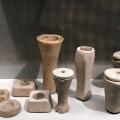
A variety of oil lamps and small pots made of alabaster, as described in the Guimet's caption, were discovered at Mundigak. Alabaster is a soft stone, typically light in color, translucent and easy to work with. According to Allchin, Ball and Hammo… >
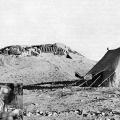
"The whole district was known as Kar Karez and the track eventually took us through a village called Mundigak, the name Jean-Marie had borrowed for the mound. High mud-brick walls, square, flat-roofed houses, all skirting the grey gravel of the rive… >