Home

Main navigation

  • home
  • slides
  • essays
  • articles
  • books
  • video
  • q & a
  • blog
Secondary menu
  • about us
    • scholars
    • privacy
    • support
    • image rights
    • credits
    • contact us
  • resources

Excavation History

Essays on the archaeological exploration and excavation history of ancient Indus Valley sites including Harappa, Mohenjo-daro and Gola Dhoro.

John F. Fleet, 1912

"The place is now of no importance : but extensive ruins and mounds, one of which rises to the height of sixty feet, indicate that the case was otherwise in ancient times and it has yielded thousands of coins of the ‘‘ Indo-Scythians and their successors." >

Sir Alexander Burnes, 1831

"About fifty miles eastward of Toolumba, I passed inland for four miles to examine the ruins of an ancient city, called Harapa. The remains are extensive, and the place, which has been built of brick, is about three miles in circumference." >

Sir Alexander Cunningham, 1853-1873

"The ruins of Harapa are the most extensive of all the old sites along the banks of the Ravi. On the north, the west, and the south, there is a continuous line of mounds about 3,500 feet in length." >

M. Longworth Dames, 1884-1886

"Another seal, apparently in the same writing, was obtained on November 21st, 1884, by Mr. J. Harvey, Inspector of Schools, Multan. This seal is of a drab-coloured smooth stone, perfectly flat on the engraved side and rounded at the back." >

Daya Ram Sahni, 1917

"The ancient remains of Harappa in the Montgomery District are one of the most ancient and extensive city sites in the Punjab, but unfortunately they continue to be used as a quarry for building materials up till now. I hope to shortly approach the Government with a proposal for declaring these ruins as a protected monument . . ." >

Daya Ram Sahni

Rai Bahadur Daya Ram Sahni (1879-1939) was a pivotal figure in the discovery of Harappa, familiar with the mysterious seals and earlier archaeologist and scholar's visits to the site. It was Sahni who, after a three-day visit in February 1917 began the process that led to his first excavations there in January 1921. >

First Light on a Long Forgotten Civilization

NOT often has it been given to archeologists, as it was given to Schliemann at Tiryns and Mycenae, or to Stein in the deserts of Turkestan, to light upon the remains of a long-forgotten civilisation. It looks, however, at this moment, as if we were on the threshold of such a discovery in the plains of the Indus. Up to the present our knowledge of Indian antiquities has carr… >

Sutkagen Dor: An Investigation of the Western-most Harappan Trading Post

Kaiser Tufail

About 60 kilometers north-west of Gwadar, close to the Makran Militia post at Suntsar, lie the ruins of an enigmatic settlement that goes by the present-day appellation of Sutkagen Dor (burnt mound). Dasht River which flows nearby, discharges into the Arabian Sea next to the Pak-Iran border. A 400-km long stretch of low sedimentary rock running east-west, known as the Makran C… >

Recent Indus Discoveries and Highlights from Excavations at Harappa 1998-2000

Richard H. Meadow
Jonathan Mark Kenoyer

Ravi Phase and Kot Diji Phase Occupations On the northern part of Mound AB (Figure 1) excavations in 1996 were undertaken in both the Ravi (Hakra) Phase (Period 1: 3300-2800 BCE) and the Kot Diji Phase (Period 2: 2800-2600 BCE) occupation levels. In 1998 - 2000 a much larger horizontal exposure was made of both Ravi and Kot Diji levels. During the Ravi and Kot Diji Phases v… >

Recent Indus Discoveries and Highlights from Excavations at Harappa 1998-2000

Richard H. Meadow
Jonathan Mark Kenoyer

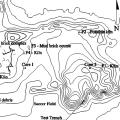
Harappa Phase Occupation: Chronology and Fortification Wall Since 1986, excavations of the Harappa Phase occupations (2600-1900 BCE), have been conducted on all of the major mounds and in low lying areas between the mounds and along their peripheries (Figure 1). On the basis of these studies, it is possible to determine the overall size of the city at over 150 hectares and … >

Pagination

  • First page
  • Previous page
  • Page 1
  • Page 2
  • Page 3
  • Next page
  • Last page
© Harappa.com 1995-2026 31