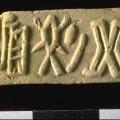
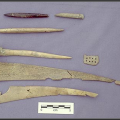
Two leading ancient Indus archaeologists on the inscribed objects discovered over the past 20 years at the ancient site of Harappa in Punjab, Pakistan. >
Through a comparative study of the artifacts, pottery, architecture, faunal, and botanical remains of Harappa, an increasingly sophisticated view is obtained of the complex and dynamic political, ideological, and economic processes that were an integral part of Harappan urban society. >
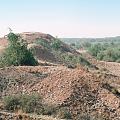
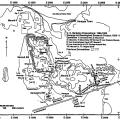
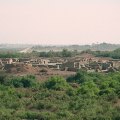
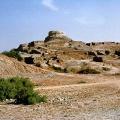
Harappa Site Plan Until quite recently, the common view of the Indus Civilization has been as a phenomenon largely undifferentiated in space and time over more than 500,000 sq km and the 500 to 700 years of its existence (2600/2500-2000/1900 B.C.). With continuing archaeological work … >
Study of the excavated material combined with radiocarbon dates has made it possible to present a detailed chronology for the Harappa site and a more precise breakdown of the types of artifacts and architectural traditions associated with each major occupational period. >
Recently, a program of systematic surface surveys and small-scale excavations has been implemented at sites in the hinterland around Harappa. Initial results of these complementary research strategies are changing our understanding of the nature of Indus urbanism in the Punjab and have implications for the overall structure of the Indus Civilization. >
One of the great civilizations of the ancient world -- that of the enigmatic people and cities of the Indus Valley -- grew from roots that reach deep into the past of Pakistan and India. >
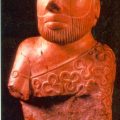
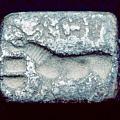
The assemblage of inscribed and incised objects discovered at the site of Harappa during excavations conducted between 1986–2007 by the Harappa Archaeological Research Project (HARP). >
The purpose of this article is not to present a summary of all of the major discoveries made in the last 55 years, but rather to highlight those that have resulted in major shifts in research paradigms and interpretive frameworks. >
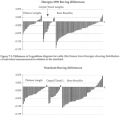
Excavations at the third millennium BCE urban site of Harappa (Punjab, Pakistan) have produced a large quantity of mammal bone remains. Two features of this material-bone measurements and density of bone in excavation units are considered from the point of view of using aspects of assemblage variability to document faunal exploitation and site formation processes. >
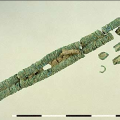
Recent work at Harappa by the Harappa Archaeological Research Project shows that a new study of artifacts recovered from the 1999 and 2000 seasons at the site has revealed the presence of silk. >