Home

Main navigation

  • home
  • slides
  • essays
  • articles
  • books
  • video
  • q & a
  • blog
Secondary menu
  • about us
    • scholars
    • privacy
    • support
    • image rights
    • credits
    • contact us
  • resources

Secondary menu

  • about us
    • scholars
    • privacy
    • support
    • image rights
    • credits
    • contact us
  • resources

Ancient Indus Civilization Videos

54 ancient Indus civilization videos curated by Ilona Aronovsky (the few worth watching).
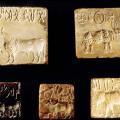
The Chronology of Indus Seal Production in the Ghaggar Basin: Microscopic and Experimental Analysis

20:24
Ayumu Konaskuwawa

Ayumu Konaskuwawa of Kyoto University goes through the first chronology and detailed study of Indus seal production in Kunal, Farmana, Banawali, and Rakigarhi based on the latest scientific techniques. >

Observations on the Manufacture and Raw Material Provenance of Indus Civilization Seals

Indus Seals
20:01
Randall W. Law

Dr. Randall Law gives in in-depth analysis of the steatite manufacturing debris used in ancient Indus seals to show how the bulk of it came from sources in the far north including Hazara and Jammu. >

There and Back Again: Deconstructing Indus-related Seals Found Beyond the Harappan World

25:02
Dennys Frenez

Dr. Dennys Frenez discusses the larger frame of seals and sealings in the ancient world and how ancient Indus seals found outside South Asia fit into this picture. >

Understanding the Discovery of the Harappan Civilization

1:13:27
Nayanjot Lahiri

The author of Finding Forgotten Histories How the Indus Civilization was Discovered tells the story of the earliest investigators and discoveries that led to Harappa and Mohenjo-daro being recognized as remants of a large Bronze Age Civilization that we now know stretched over much of the north-western subcontinent. >

The Role of Marine Shell in the Ornaments, Arts and Rituals of the Indus Tradition: 7000-1900 BCE

1:05:03
Jonathan Mark Kenoyer

Dr. Jonathan Mark Kenoyer discusses some of the earliest trade items linking coastal, interior Indus and distant regions together. They were also important public symbols of identify, gender, wealth, status and ethnicity. >

The Royal Mounds of A’ali, Bahrain

1:04:15
Steffen Terp Laursen

The leader of the Danish expeditions excavating the ancient civilization of Dilmun, now in Bahrain, a key connector between the ancient Indus and Mesopotamian civilization. Towards the end of the Indus civilization, it seems as if Indus people helped establish seal and weight technologies and other cultural practices that led to a flourishing of this civilization. >

One Hundred Years of Indus Archaeology: Major Discoveries, New Perspectives, Future Directions

33:22
Jonathan Mark Kenoyer

Dr. J.M. Kenoyer surveys the rise of the ancient Indus civilization, its indigenous origins and how the latest research is changing our perspective on the civilization. This includes new research on climate change, raw material procurement, the wide expanse of the civilization and connections between cities. >

Textiles of the Indus Civilization: with a special focus on cotton

Indus Textile and Figurine
26:57
Jonathan Mark Kenoyer

Dr. Jonathan Mark Kenoyer discusses the oldest evidence of cotton in the world, at the site of Mehrgarh in Balochistan, and early uses of cotton and other fibres in the ancient Indus civilization. Examples of textile use compared with similar patterns and usage in modern times. >

Textiles and Basketry of the Indus Tradition: Archaeological Evidence and Historical Legacy

Priest King and Reconstruction
1:04:03
Jonathan Mark Kenoyer

Jonathan Mark Kenoyer's Deccan College Lecture on April 10 2021 goes into the earliest evidence of textiles in the greater Indus Valley, from Mehrgarh in 7000 BCE through Indus times, digging into the specific varieties of cotton, linen, flax, silk and other plant fibers and even colours used. >

The Indus Civilization Trade with the Umm an-Nar Communities of the Oman Penninsula: A New Paradigm

20:33
Dennys Frenez
Jonathan Mark Kenoyer
Sophie Mery

Dennys Frenez describes the extensive finds from the Indus civilization in Oman, including a variety of pottery types, seals, etched carnelian beads and more. Beautifully illustrated, includes the work of Jonathan Mark Kenoyer and Sophie Mery. >

Coastal Crossroads: HD-1 Site at Ras a-Hadd, Sultanate of Oman

24:05
Jonathan Mark Kenoyer
Dennys Frenez
Maurizio Cattani

Jonathan Mark Kenoyer presents recent finds made by the Joint Hadd Project which includes Dennys Frenez and Maurizio Cattani (U. of Bologna, Italy) that has revealed a wide variety of Indus artifacts at this coastal site. From pottery, black-slipped jars from Mohenjo-daro, beads, cotton, steatite beads, drills and more that testify to the close links between HD-1 and the ancient Indus region between 2700 and 2000 BCE. >

Building a Bioarchaeology of Climate and Environmental Change: Multi-scalar approaches

1:32:26
Gwen Robbins Schug

A wide-ranging, illustrated talk on bioarchaeology and climate change, and the many misconceptions people have about the latter. In the case of the ancient Indus Valley civilization for example, the inhabitants demonstrated many strategies for dealing with varying environmental conditions, so that attributing the decline of the civilization to climate change is likely incomplete. >

Ornaments, Trade and Urbanism of the Indus Tradition, 7000-1300 BCE

45:47
Jonathan Mark Kenoyer

The keynote lecture at the University of Kerala's March 2021 international webinar on Indus Civilization by Dr. Jonathan Mark Kenoyer (University of Wisconsin, Madison). An in-depth, fully illustrated look at ornamentation, ideology and its role across the wider Indus Valley, from the carnelian that comes from Gujarat that was worked on at sites like Harappa, to the steatite from Hazara that was worked on in areas far to the south. >

Heritage, Decolonisation and the Field: A Conference

50:58
Sudeshna Guha

A review of archaeological history and perspective in India from its origins in colonial times through Independence. The role of museums and politics in formulating archaeological practice and display, and how colonial practice remains current in the way we look at the ancient Indus civilization. >

The Indus Script Demystified: Origins, Character and Disappearance

1:05:12
Jonathan Mark Kenoyer

Dr. Jonathan Mark Kenoyer delivers the 23rd Gulestan and Rustom Billimoria Endowment Lecture at the Asiatic Society of Mumbai, Dec. 14, 2020. A deep exploration of the Indus script and its evolution in the context of Indus civilization and other neighbouring Bronze Age cultures and their writing systems. Profusely illustrated, and including the latest research by leading scholars. >

Pagination

  • Previous page
  • 2
  • Next page

Videos by Subject (21)
  • Archaeologists
  • Dholavira
  • Dilmun
  • Evolution
  • Excavations
  • Halil Rud
  • Harappa
  • HD-1 (Oman)
  • Lectures
  • Lothal
  • Manufacturing
  • Mehrgarh
  • Mohenjo-daro
  • Oman
  • Ornamentation
  • Overview
  • Seals
  • Textiles
  • Trade
  • Water
  • Writing
© Harappa.com 1995-2026 31