
Ravi Fisheries
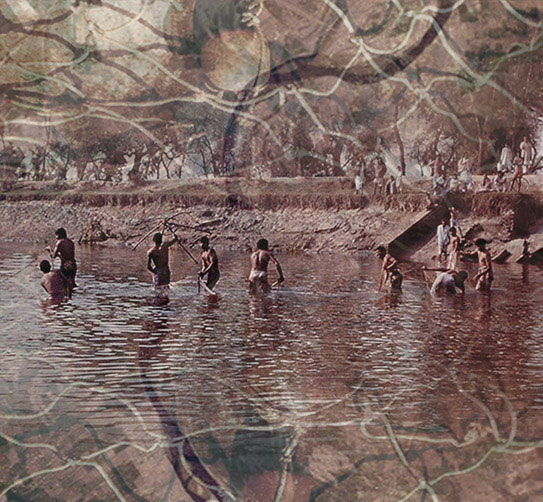
Archaeologist William Belcher looks at fish and fishing practices on the Ravi River today and relates them to what we know about osteology in ancient Indus times. Fishing was a key ecological and nutritional component of life then as it is now.
|
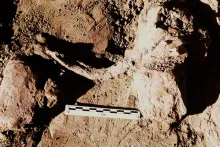
1. Fish Bone/Wallago Attu Mandible/Dentary in Situ at Harappa In the early 1990s, I was a new graduate student in the Department of Anthropology at the University of Wisconsin-Madison. In order to prepare myself for taking my qualifying exams, I was sitting in… |
|
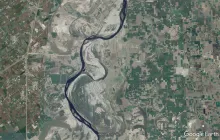
2. Environments – Satellite Image from Google The aquatic environments around Harappa are riverine and composed of marshlands, oxbow lakes, and the River Ravi itself. Each of these areas represented a specific environment in which fish and many… |
|
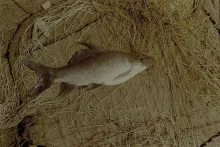
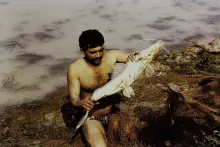
3. Various Carp, Family Cyprinidae Carp represent one of the most ubiquitous fish in the Ravi and its surrounding environs. However, many of the indigenous species have been overtaken by an introduced species from China – the so… |
|
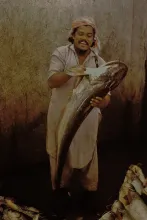
4. Mystus Aor, Catfish, Family Siluridae The following slides are related to certain species of riverine catfish, including the families Siluridae, Bagridae, and Sisoridae. Many of these catfish grow to in excess of 2 meters in length and… |
|
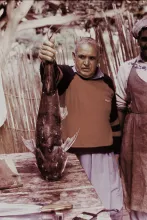
5. Wallago Attu, Catfish, Family Siluridae |
|
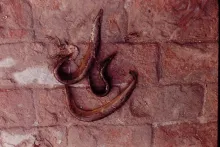
6. Bagarius Bagarius Catfish, Family Sisoridae While this fish is common in the archaeological deposits, Wallago attu and Rita rita are the most common. However, this fish, locally known as Goonch is one of the largest catfish known in Asia. It… |
|
7. Spiny Eels, Family Mastacembelidae Spiny eels are relatively uncommon in the archaeological record and within the general diet of the Punjabi folk. These fish also can survive in extremely environments in soft mud with little water. |
|
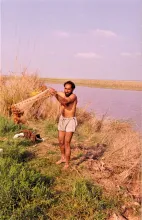
8. Cast Nets One of the main methods of catching fish is using casting or throw nets. The mesh size (or “eye”) is currently controlled by fisheries laws by the Punjab Province. However, mesh size will vary… |
|
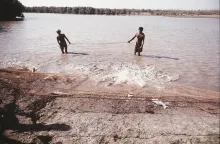
9. Seine Nets Seine nets are the dominant net used to harvest fish in the oxbows. Again, the “eye” or mesh size of the net is controlled by the Punjabi government, but allow the oxbows to be harvested through a… |
|
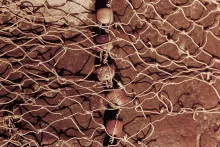
10. Clay Net Weights The older nets that were observed in the Punjab had net weights that were made of fired clay, while the modern ones used standard lead net weights. These were the same shape as small barrel beads… |
|
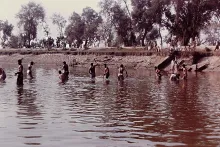
11. Fish traps Another type of fishing method seen in the Punjab was a type of conical fish trap. The trap was a multi-leg frame covered with a net. The trap would be placed over the top of a fish and extracted… |
|
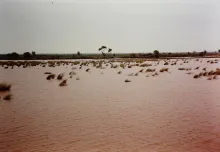
12. Monsoonal Flooding and Oxbow Lakes The River Ravi is a meandering river that travels back and forth across its alluvial plain leaving a series of landscape scars of old river channels. During the summer monsoons (May through… |
|
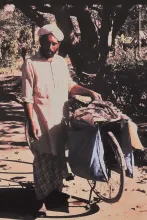
13. Getting the Fish to Market Most of the fisher folk have a low-tech way of getting the fish to the market – primarily burlap bags and a bicycle. Often the fish are sold to passers-by as the fisher folk will have a scale to… |
|
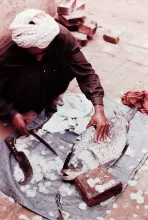
14. Fish Markets The main fish markets near the modern village of Harappa were within the village itself as well as the District market in the local District center, Sahiwal. Most of the fish within the local market… |
|
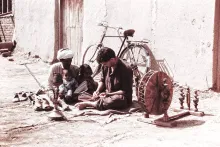
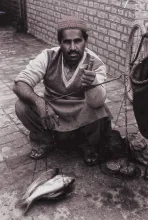
15. Fisher Folk – Baba Yaqoob One of my main informants in Harappa Town was an elderly man named Baba Yaqoob. He was retired at the time during the mid-1990s, while his sons worked their land as well as a vegetable stand on the… |
|
16. Fisher Folk - Gulam Mustafa Gulam Mustafa was one of my main fisher folk informants. He had several businesses that he ran, but he also had a lot of knowledge and the equipment related to fishing. He helped procure many of… |