
Around the Indus in 90 Slides 2
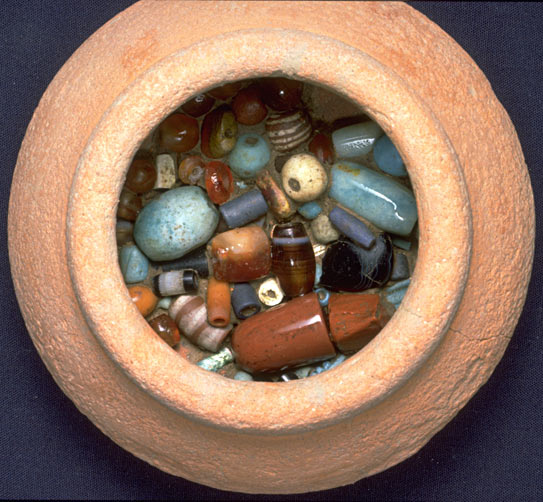
The Latest Discoveries at Harappa 1995-1998 include the earliest Indus writing, a 133 bead pot, 16 tablets, and more.
By Richard H. Meadow and Jonathan Mark Kenoyer and based on work by the Harappa Archaeological Research Project (HARP) of which they are Co-Directors.
|
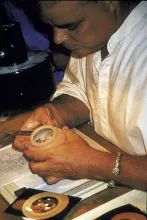
81. Bead Pot Careful excavations of the pot by J. M. Kenoyer required several weeks. This was done in the evenings after other excavation lab work was finished. The pot and its contents were photographed before… |
|
82. Bead Pot After removal of the overlying sediment it was clear that the pot was filled with beads. Each bead was mapped in and then photographed before removal. In the lower levels were many tiny beads that… |
|
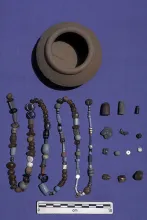
83. Pot with beads In the end, the small Late Harappan Period Pot yielded 133 beads and other decorative objects. Although left behind by a bead collector at almost 1700 BCE, the wide variety of beads and other objects… |
|
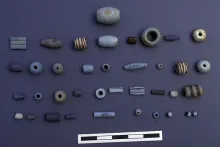
84. Faience beads Faience beads of different shapes and colors were found in the bead pot (83). Some of these appear to be imitations of the natural stones; deep azure blue lapis lazuli, blue-green turquoise and… |
|
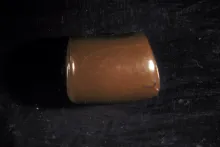
85. Red-brown glass-like bead This bead was thought to be the earliest glass in the subcontinent, dating at least to 1700 BC. Trench 38, Late Harappan Period. However, subsequent analysis in 2008 has determined that it is not… |
|
86. Stone beads The beads in the top three rows of from the bead pot (83) were drilled with tapering holes, possibly with tubular drill or tapered cylindrical drill. The green beads are amazonite, banded agate,… |
|
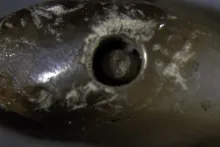
87. Tubular drill hole Tubular drill hole in an unfinished bead found from the bead pot (83) at Harappa. This unfinished bead with a tubular drilled hole suggests that bead workshops were still producing ornaments at… |
|
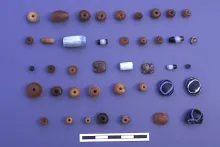
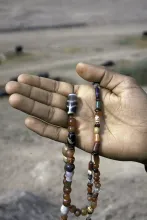
88. A collection of beads This collection was found from the eroding surface of Bawani, a site not far from Harappa that dates from the 3rd century BC. The red brown beads are glass beads of the Early Historic Period showing… |
|
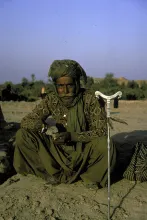
89. Faqir in Sindh This man is wearing prayer beads made of carnelian around his neck. |
|
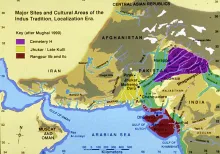
90. Late Harappan Localization Era Map This map shows the major cultural interaction regions c. 1900-1300 BC: Cemetery H in the north, Jhukar in the south and Rangpur in Gujarat. During this period there were still urban centers in the… |