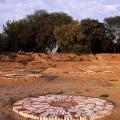
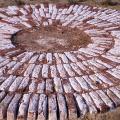
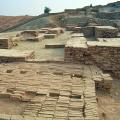
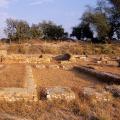
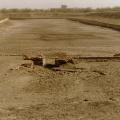
These platforms are often called workmen's platforms, and were first thought to have been used to thresh grain for what was also thought to have been the nearby "Great Granary." >
In 1998, the circular platform first exposed by Sir Mortimer Wheeler in 1946 was re-exposed and the area around the platform was expanded to reveal the presence of the room in which it was enclosed. The brick walls had been removed by brick robbers … >
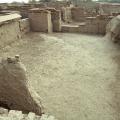
This large room or courtyard was filled with a solid mud brick platform that was almost entirely excavated to investigate the underlying room. A section of the platform has been preserved beneath the tin roof on the left and part of the platform is … >
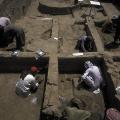
To the west of Wheeler's circular platform a new platform was discovered. This platform was excavated using modern stratigraphic procedures and detailed documentation. Charcoal, sediment, animal bone, charred plant and other botanical samples were c… >
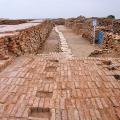
The main street running north south along the east edge of the Great Bath ends with this unique brick platform. The hollow sockets would have held wooden beams that may have formed a gate or traffic control device. A small alley leads directly east … >
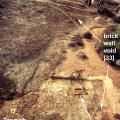
Overview of Trench 57 excavations that were continued in 2001 to reveal massive baked brick wall voids and additional baked brick drains. Looking West. >
Looking south along the street to the east of the Great Bath. In the foreground is a unique brick platform with hollow sockets used to place upright beams that may have formed a gate or traffic control device. A large street drain covered with limes… >
The dominant sight at Lothal is the massive dockyard which has helped make this place so important to international archaeology. Spanning an area 37 meters from east to west and nearly 22 meters from north to south, the dock is said by some to be th… >