Home

Main navigation

  • home
  • slides
  • essays
  • articles
  • books
  • video
  • q & a
  • blog
Secondary menu
  • about us
    • scholars
    • privacy
    • support
    • image rights
    • credits
    • contact us
  • resources

Mound F

Harappa Mound F (the "Granary") related images.

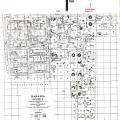
Plan view of the so-called "granary" at Harappa

Plan view of the so-called "granary" or "parallel-wall structure" on Mound F at Harappa indicating areas of HARP excavations conducted in 1997 and 1999. Note that the structural remains surrounding the "granary" are, for the most part, later than th… >

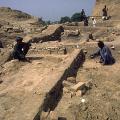
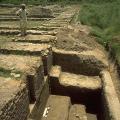
Overview of the upper levels of the excavations

Overview of the upper levels of the Trench 43 excavations in 1999 shows the eroded city wall in the background and the fallen baked brick walls of late Period 3C structures in the foreground. >

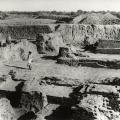
Great Granary in Mound F, Harappa

The so-called "Great Granary" in Mound F. Its earliest levels date to 2450 B.C. A similar structure, also about 50 meters long and built on a massive brick or mud-brick platform, was found at Mohenjo-daro. Influenced by European precedents, early ar… >

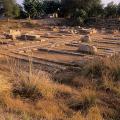
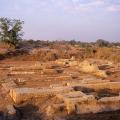
Overview of the Harappa "granary" area

Overview of the "granary" area looking towards the southeast. The walls have been partly restored for conservation purposes by the Department of Archaeology and Museums, Government of Pakistan. >

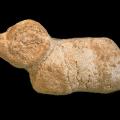
Part of an antler

Part of an antler, including the burr and the brow tine, shed from a large deer, probably sambhar (Cervus unicolor) or swamp deer (Cervus duvauceli) (H99-3828/8763-01 from Trench 43). This specimen may have been used as a pick or possibly a punch fo… >

"Great Granary," Harappa

No grain, storage containers or clay sealings such as would have been attached to goods for shipment were found in the so-called "Granaries" of Harappa or Mohenjo-daro. Archaeologists today prefer to call these structures great halls, since they wer… >

Excavations at the corner of the "granary" area

Excavations in 1997 at the southeast corner of the "granary" area were undertaken to recover a full sequence of pottery, architectural features, and inscribed objects. Here workers have found a seal near the base of the excavations in Trench 41NE th… >

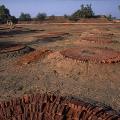
Harappan Kiln

Period 4 (Late Harappan transitional) kiln with hollow lower fire box and arched floor with holes for allowing heat to enter the upper firing chamber. This type of kiln was introduced at Harappa ca. 1900 BC and allowed the potters to reach higher te… >

Mound F Room, Harappa

There are no answers to the purpose of this structure; current speculation suggests it may have been a palace for a ruler or a ruling group, or perhaps even a building for priests such as the later Buddhist monasteries. >

A small baked brick structure with sump pots

In the upper levels of , a small baked brick structure with sump pots was found. This structure, possibly a latrine, is on the northern margin of a major east-west street that ran along the southern edge of the "granary" area. It dates to late in Pe… >

Pagination

  • Page 1
  • Page 2
  • Page 3
  • Page 4
  • Page 5
  • Page 6
  • Next page
  • Last page
© Harappa.com 1995-2026 31