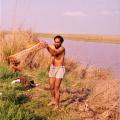
One of the main methods of catching fish is using casting or throw nets. The mesh size (or “eye”) is currently controlled by fisheries laws by the Punjab Province. However, mesh size will vary depending on the target species of fish. Like a sieve… >
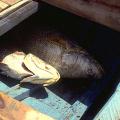
Fish are stowed beneath the floor boards of the boat's deck to protect them from the sun. The traditional vessels do not carry ice and it is important to keep these fish out of the sun so that they do not spoil. Each of the panels is numbered so th… >
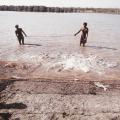
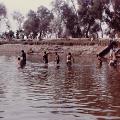
Seine nets are the dominant net used to harvest fish in the oxbows. Again, the “eye” or mesh size of the net is controlled by the Punjabi government, but allow the oxbows to be harvested through a series of sweeps across the entire body of water. … >
Seasonal variation in fish occurs and is important to document these changes in order to understand seasonal fishing patterns in the present as well as the past. What I found in discussions with fisheries biologist at the Department of Marine Fisher… >
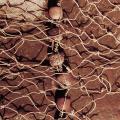
The older nets that were observed in the Punjab had net weights that were made of fired clay, while the modern ones used standard lead net weights. These were the same shape as small barrel beads that were tied with an overhand knot on each side of… >
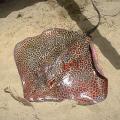
While not usually used for food, sting-rays, sharks, and skates are important to the fishing industry itself. The livers are harvested by specialists in the village who boil them down to make a thick, malodorous oil. This oil is spread over the wood… >
Another type of fishing method seen in the Punjab was a type of conical fish trap. The trap was a multi-leg frame covered with a net. The trap would be placed over the top of a fish and extracted either from the top or the bottom, depending on the… >
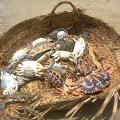
Crabs and other crustaceans are caught and used as a minor food item. These animals are considered extremely "hot" and are eaten for the treatment of ailments such as the flu or colds. Many Asian cultures have a dichotomy of "hot" and "cold" categor… >
The River Ravi is a meandering river that travels back and forth across its alluvial plain leaving a series of landscape scars of old river channels. During the summer monsoons (May through September), sometimes the rivers create catastrophic flood… >