Home

Main navigation

  • home
  • slides
  • essays
  • articles
  • books
  • video
  • q & a
  • blog
Secondary menu
  • about us
    • scholars
    • privacy
    • support
    • image rights
    • credits
    • contact us
  • resources

Citadel

Ancient Indus Valley and related civilization citadel excavations

Mohenjo-daro Lower Town: Main Street HR/VS area and stupa view

  • Mohenjo-daro Lower Town: Main Street HR/VS area and stupa view

Standing in HR area and looking northwest at the juncture of Last Street (east west) and First Street (north south). VS area is seen on the other side of the street and the stupa mound rises in the background. Stacks of mud bricks are waiting to be … >

Conservation of brick walls in DK - G Area, Lower Town

  • Mohenjo-daro Conservation of brick walls in DK - G Area, Lower Town

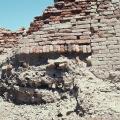
One relatively successful low cost techniques used to combat the destructive nature of salts in the fired bricks is to cover the walls with a thick layer of mud and straw plaster and to spray them with clay slurry. When the salts percolate to the su… >

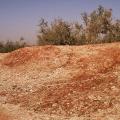
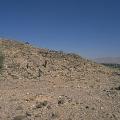
Eroded surface of the mound DK-I Area

  • Mohenjo-daro, Eroded surface of the mound DK-I Area

The pathway leading from VS to DK-I area follows the natural topography of the mounds. The eroding surface is littered with over fired nodules, pottery, brick fragments and other artifacts that are heavily encrusted with efflorescent salts. >

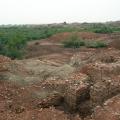
Room in between L and SD Areas

  • Mohenjo-daro, Room in between L and SD Areas

Narrow brick walls define the outlines of a small room or courtyard in the low-lying area between L and SD Areas on the Citadel Mound. A standard size of mud brick and baked brick (7 x 14 x 28 cm) was used in house construction, and a different size… >

Lower Town: HR Area mud brick platforms

  • Mohenjo-daro, Lower Town: HR Area mud brick platforms

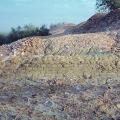
The foundations of many houses were constructed on top of massive mud brick platforms such as this one eroding from the edge of the mound along the major east-west street dividing HR and VS areas. The size of large mud bricks used for the constructi… >

Nodule and Pottery Foundation fill, HR Area

  • Mohenjo-daro, Nodule and Pottery Foundation fill, HR Area

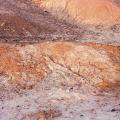
Some of the later houses in HR area were constructed on top of massive deposits of garbage consisting of brick rubble, broken pottery and sometimes a thin layer of crushed, vitrified terracotta nodules. Three sequences of rebuilding can be seen with… >

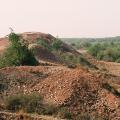
Excavation Debris Pile, DK-I Area

  • Mohenjo-daro, Excavation Debris Pile, DK-I Area

Earth and debris excavated from the houses and streets of DK-I area was dumped directly onto parts of the unexcavated mound, making it difficult to discern where the original mound ends and where the dirt pile begins. Valuable information on craft a… >

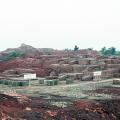
UM Area, and Citadel Mound

  • Mohenjo-daro, UM Area, and Citadel Mound

The UM excavations conducted by Dr. G. F. Dales in 1964-65 exposed a massive mud brick platform on top of which were built numerous brick buildings separated by narrow lanes. The pottery excavated from this area was used to develop the most comprehe… >

"Citadel" of late 3rd mill Kanri Buthi, Bahlol Valley

"Citadel" of late 3rd mill Kanri Buthi, Bahlol Valley. >

Lower Town in the mist

  • Mohenjo-daro Lower Town in the mist

On an early winter morning the mist settles in the low-lying areas of Mohenjo daro between the "citadel" and the "lower town". In the distance the heavy mist on the Indus River forms a solid white line. The mounds of the "lower town" are barely visi… >

Pagination

  • Page 1
  • Page 2
  • Next page
  • Last page
© Harappa.com 1995-2026 31