Home

Main navigation

  • home
  • slides
  • essays
  • articles
  • books
  • video
  • q & a
  • blog
Secondary menu
  • about us
    • scholars
    • privacy
    • support
    • image rights
    • credits
    • contact us
  • resources

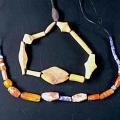
Ancient Indus Valley civilization beads.

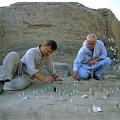
Agate drill tips

During drilling, the tips of agate drills become hot and often spall off. Fine screens allow the collection of the spalled drill tips, the finding of which confirms that drilling as well as shaping of beads was done in this area of the site during t… >

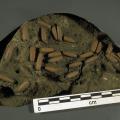
Ravi Phase beads

These beads from the Ravi Phase (3300-2800 BCE) at Harappa have been made from carnelian and amazonite (right hand bead). The raw material used to make these beads was brought to the site from source areas probably in Gujarat, over 900 km to the sou… >

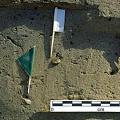
Jasper drill bits

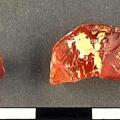
Jasper drill bits were used for drilling carnelian and amazonite beads during the Ravi and subsequent phases at Harappa. On the left are two snapped drill tips while on the right is a broken drill base. All are from the Ravi phase. >

Small pot

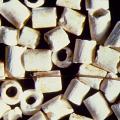
A small pot dating to the Period 3C of the Harappa Phase (c. 2200-2000 BCE) was found in excavations on Mound E in 1998. This tiny pot contained fired steatite beads similar to those made during the Ravi Phase as well as faience beads and beads made… >

Harappa phase banded beads in situ

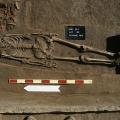
In the street levels above the drain a collection of banded sandstone and banded terracotta beads were discovered. >

Bead Pot

Initial probing to determine the contents of this small pot (79) from Trench 38, Late Harappan Period, revealed the presence of carnelian and faience beads. >

Lower town of Lothal

The bead factories, situated where the 8th street of the commercial area and the 5th street of the residential area meet, comprised the main industry of the Harappans. They probably settled (or their culture came) to the Gulf of Cambay region becaus… >

Red-brown glass-like bead

This bead was thought to be the earliest glass in the subcontinent, dating at least to 1700 BC. Trench 38, Late Harappan Period. However, subsequent analysis in 2008 has determined that it is not glass, but some form of crystalline rock. >

Harappa Beads

Six long beads, exhibited in two rows of three each. From mounds F and AB. Finds nos. that are noted are: A(e) 99, Ab 692, A(f) 1, B 1543, B 770. Two on either side of the bottom row are of terracotta as they look similar to the one publish… >

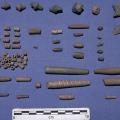
A collection of beads

This collection was found from the eroding surface of Bawani, a site not far from Harappa that dates from the 3rd century BC. The red brown beads are glass beads of the Early Historic Period showing a continuity with the glazing technology of red fa… >

Pagination

  • First page
  • Previous page
  • Page 1
  • Page 2
  • Page 3
  • Next page
  • Last page
© Harappa.com 1995-2026 31