Home

Main navigation

  • home
  • slides
  • essays
  • articles
  • books
  • video
  • q & a
  • blog
Secondary menu
  • about us
    • scholars
    • privacy
    • support
    • image rights
    • credits
    • contact us
  • resources

Mohenjo-daro

Images of and objects from the ancient Indus city of Mohenjo-daro, Sindh.

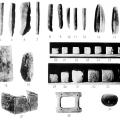
Indus Household objects. Flint Implements, Weights

  • Indus Household objects. Flint Implements, Weights

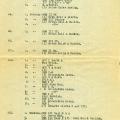
[Original 1931 text] "The flint implements found at Mohenjo-daro are of the simplest description, most of them being long flakes that were probably used for cutting up meat and for other household purposes. Both the flakes and cores from which they … >

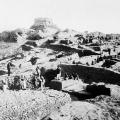
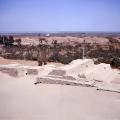
Southern Buildings in course of excavation, from south-west

[Original 1931 text] "A considerable number of buildings separated from each other by streets and lanes have been excavated in the southern portion of the stupa mound . . .. The terrain here descends more or less abruptly to the south, where a narro… >

Wheeler's List 1 Plates [88-103]

  • Wheeler's List 1 Plates

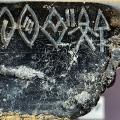
An Unfinished Unfired Seal

One of the most intriguing of Indus inscriptions, displayed upside down in the glass case in the second image [above]. Was it going to be a seal or not? It looks like it. Dr. Kenoyer points out that "The depression under the script is the beginning … >

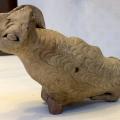
Ram Figurine

Dr. Kenoyer writes (Ancient Cities, p. 164) referring to this ram figurine that domestic goats were "kept in cities, where they were used for meat and diary products, as well as for wool or goat's hair," and (p. 227): "Hollow, seated ram figurine… >

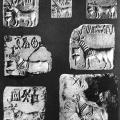
Seals from Harappa and Mohen-jodaro with an Unknown Form of Picture Writing

BEARING FIGURES OF BULLS AND MYSTERIOUS PICTOGRAPHIC SYMBOLS, SOME RESEMBLING ROMAN NUMERALS: PREHISTORIC INDIAN SEALS FROM HARAPPA AND MOHENJO-DARO WITH AN UNKNOWN FORM OF PICTURE WRITING >

Mohenjo-daro Countryside 2

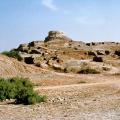
Mohenjo-daro, Sindh

This view shows the high western mound made up of a massive mud brick platform and brick houses of the Harappan period ( 2600 to 1900 B. C.). On top of the Harappan structures is a Buddhist period stupa made of mud brick that dates to the first cent… >

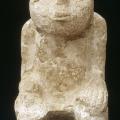
Sculpture

Seated male sculpture with shell inlay still remaining in one eye. The braided or combed hair lays back straight and a plain fillet or ribbon encircles the head and falls down the back of the neck. Two strands of a ribbon or braided hair hang over t… >

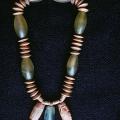
Necklace

Necklace from Mohenjo-daro made from gold, agate, jasper, steatite and green stone (lizardite or grossular garnet). The gold beads are hollow and the pendant agate and jasper beads are attached with thick gold wire. Steatite beads with gold caps ser… >

Pagination

  • First page
  • Previous page
  • Page 1
  • Page 2
  • Page 3
  • Page 4
  • Page 5
  • Page 6
  • Page 7
  • Page 8
  • Page 9
  • …
  • Next page
  • Last page
© Harappa.com 1995-2026 31