Detail of terracotta bangle with red and white trefoil on a green background (H98-3516/8667-01 from Trench 43). Trefoil motifs are carved on the robe of the so-called "priest-king" statuette from Mohenjo-daro and are also known from contemporary sit… >
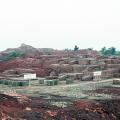
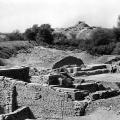
Standing in HR area and looking northwest at the juncture of Last Street (east west) and First Street (north south). VS area is seen on the other side of the street and the stupa mound rises in the background. Stacks of mud bricks are waiting to be … >
Two structure with a hole and drain located are thought to have been toilets. While these two structures may have been unique examples of toilets, most people would have used old pots set into the ground as commodes. >
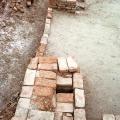
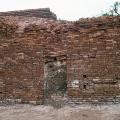
The excavations of DK-G area focused only on the section to the west of First Street. Unexcavated streets and houses lie to the east of First Street, waiting for a day when archaeologists have learned how to better preserve the fragile brick structu… >
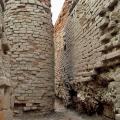
Each block of buildings at Mohenjo-Daro was supplied with one or more wells such as this one in DK-G Area. When archaeologists excavated the fill around the well they were left standing to show the final levels of use. >
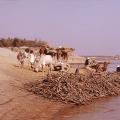
Although long distance travel on the Indus River is no longer feasible due to the construction of barrages and dams, local trade of firewood and other daily necessities is still moved up and down or across the river. Camels carrying grain wait for t… >
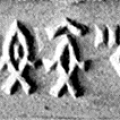
One of the longer inscriptions made from a seal found during Mackay's excavations between 1927-1931 in Mohenjo-daro (D.K. 9134). There are few long Indus inscriptions; another similarly long inscription was recently found on a wooden signboard in Dh… >