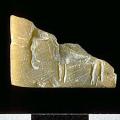
Obverse of an unfinished elephant seal (H2000-4474/8994-01) in steatite from the Kot Diji phase levels at Harappa. This is the earliest seal with an elephant motif known from the region and may have been a prototype for later Indus seals. >
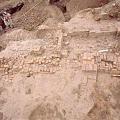
The brick wall may have been the foundation for a wooden superstructure and the white tags show where wooden posts were fixed. The doorway and threshold are located on the right side of the photograph above the scale. >
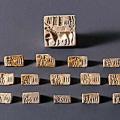
An additional six copies of these tablets, again all with the same inscriptions, were found elsewhere in the debris outside of perimeter wall [250] including two near the group of 16 and two in debris between the perimeter and curtain walls. Here al… >
After many decades of research, the Indus Civilization is still something of an enigma -- an ancient civilization with a writing system that still awaits convincing decipherment, monumental architecture whose function still eludes us, no monumental … >
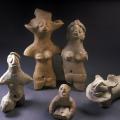
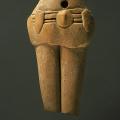
The multiple-strand belt on some of the female figurines is often accompanied by a plain short "skirt". The applied decorations on the belt may represent beads or other decorations. Approximate dimensions (W x H x D): 3.8 x 7.3 x 2.0 cm. >
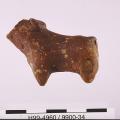
Some of the Early Harappan zebu figurines were decorated. One example has incised oval spots. It is also stained a deep red, an extreme example of the types of stains often found on figurines that are usually found in trash and waste deposits. Ap… >
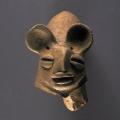
It has been suggested that some feline figurines have anthropomorphic facial features. While features such as "coffee bean" eyes are unusual, the facial features of many animal figurines are stylized. Such features as beards are not necessarily anth… >
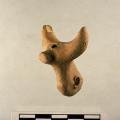
The movable heads of figurines often depict cattle. They are usually pierced laterally through the neck and vertically or sagittally through the head in order to secure them to the bodies and control them with a cord. Approximate dimensions (W x… >
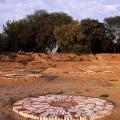
These platforms are often called workmen's platforms, and were first thought to have been used to thresh grain for what was also thought to have been the nearby "Great Granary." >
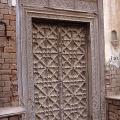
The surviving town of Harappa provides many clues to ancient times. No doors have been found in excavations, but terracotta toys and other evidence suggest that ancient doorways were much like this one in modern Harappa, down to the lock or fastener… >