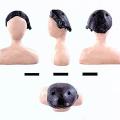
Black steatite wig from late Period 3C deposits in Trench 43 (H98-3521/8668-02). This small stone hairpiece, here displayed on a modern clay mannequin, may have been set on an alabaster head like similar pieces found in western Pakistan, Afghanistan… >
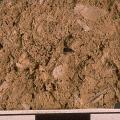
A large concentration of straw impressions was found in one part of the floor next to the platform, but there is no evidence of chaff from processing grain as was suggested by earlier excavators (Trench 43). >
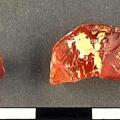
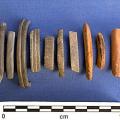
Kot Diji phase terracotta bangles include many styles and incised and painted decorations. Grey bangles were produced in kilns with a reducing atmosphere and red bangles were fired in an oxidizing atmosphere >
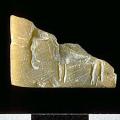
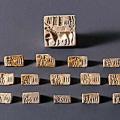
Obverse of an unfinished elephant seal (H2000-4474/8994-01) in steatite from the Kot Diji phase levels at Harappa. This is the earliest seal with an elephant motif known from the region and may have been a prototype for later Indus seals. >
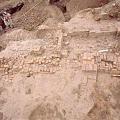
The brick wall may have been the foundation for a wooden superstructure and the white tags show where wooden posts were fixed. The doorway and threshold are located on the right side of the photograph above the scale. >
An additional six copies of these tablets, again all with the same inscriptions, were found elsewhere in the debris outside of perimeter wall [250] including two near the group of 16 and two in debris between the perimeter and curtain walls. Here al… >
After many decades of research, the Indus Civilization is still something of an enigma -- an ancient civilization with a writing system that still awaits convincing decipherment, monumental architecture whose function still eludes us, no monumental … >