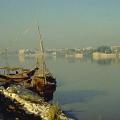
The Indus River as it flows in the Bukkur Gorge between the towns of Sukkur and Rohri some 20 kilometers (km) north of the excavation areas. In the background is the temple island of Sadhbela. >
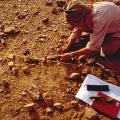
Soil samples were taken for thin section analysis in various areas of the hills to try to understand the climactic variations that took place in the area before, during and after the rise of Harappan culture. >
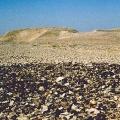
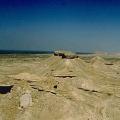
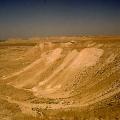
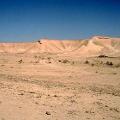
The Rohri Hills as they appear along the western fringe of the plateau, facing the fertile Indus Valley, where most of thhe Harappan flint quarries and workshops have been discovered. (The shadow is from the helicopter.) >
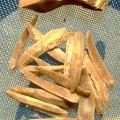
Four Harappan workshops were excavated, including site 480 from which more than 35,000 artefacts were collected. Most of them were debitage flakes, but also included narrow blades, bladelets and accurately made bullet cores. >
The Rohri Hills as they appear along the western fringe of the plateau, facing the fertile Indus Valley, where most of the Harappan flint quarries and workshops have been discovered (map). >
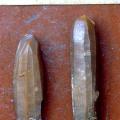
Some of the narrow bladelets discarded by Harappan flint-knappers are only 2-3 millimeters wide. Bladelets were later retouched into insturments in the Indus Valley cities. They were often shaped into microdrills for piercing stone and shell beads. >
The Rohri Hills as they appear along the western fringe of the plateau, facing the fertile Indus Valley, where most of the Harappan flint quarries and workshops have been discovered. >
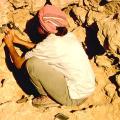
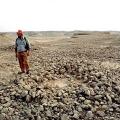
The first Harappan flint quarries here were discovered during a preliminary survey carried out in January 1986 by the writer and Prof. M. Cremaschi of Milan University (standing close to one of the structures). They are in the central-western part o… >