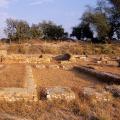
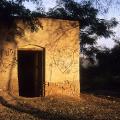
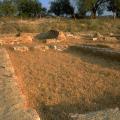
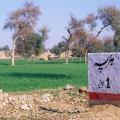
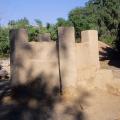
Contemporary guard hut overlooking the "Granary." Many questions about ancient Harappa will never be answered. But with the first modern, multi-disciplinary excavations of an Indus city at Harappa, many misconceptions are being laid to rest and much… >
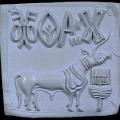
Seals were used to make a sealing, or positive imprint, like this modern resin one made from the original seal. Sealings were used in ancient times for trade. They would be made on ceramics or the clay tags used to seal the rope around bundles of go… >
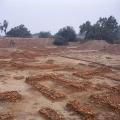
There are no answers to the purpose of this structure; current speculation suggests it may have been a palace for a ruler or a ruling group, or perhaps even a building for priests such as the later Buddhist monasteries. >
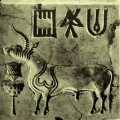
This unicorn seal was also discovered during the late 1927-31 excavations at Mohenjo-daro. One theory holds that the bull actually has two horns, but that these have been stylized to one because of the complexity of depicting three dimensions. Howev… >
New possibilities might be forthcoming in the next two years [as written in 1998]. Excavations are due to begin in the small parts of the granary not completely excavated by the first archaeologists at Harappa, R. B. D. R. Sahni and M.S. Vats, betwe… >
In addition to any commercial functions, the seal may also have designated a position of authority. The motif on the seal could also have been an amulet or charm. The seal itself was probably worn around the neck, with a chord passed through the … >
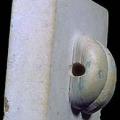
A good counter example to "Great Granary" having been used to store grain is this actual granary popular in the villages surrounding Harappa. Grain is stored in earthen structures, and accessed as needed through a re-sealable hole at the bottom. >