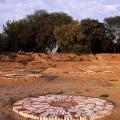
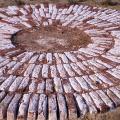
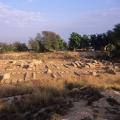
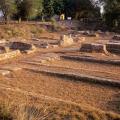
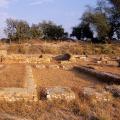
These platforms are often called workmen's platforms, and were first thought to have been used to thresh grain for what was also thought to have been the nearby "Great Granary." >
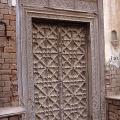
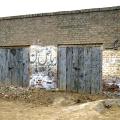
The surviving town of Harappa provides many clues to ancient times. No doors have been found in excavations, but terracotta toys and other evidence suggest that ancient doorways were much like this one in modern Harappa, down to the lock or fastener… >
The so-called "Great Granary" in Mound F. Its earliest levels date to 2450 B.C. A similar structure, also about 50 meters long and built on a massive brick or mud-brick platform, was found at Mohenjo-daro. Influenced by European precedents, early ar… >
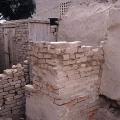
These doorways in modern Harappa show how a town grows into a mound. Dust and dirt in streets slowly collect and cover doorways. Ultimately they are abandoned and new doorways and buildings are constructed above them. This process is underway throug… >
No grain, storage containers or clay sealings such as would have been attached to goods for shipment were found in the so-called "Granaries" of Harappa or Mohenjo-daro. Archaeologists today prefer to call these structures great halls, since they wer… >
No "Great Bath" like that in Mohenjo-daro has been found in Harappa, and it is not known if one existed among the miles of ruins carted off for railway construction in the early 1850's. A large bath does however exist very near the mounds, construc… >
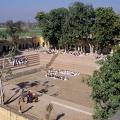
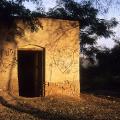
Contemporary guard hut overlooking the "Granary." Many questions about ancient Harappa will never be answered. But with the first modern, multi-disciplinary excavations of an Indus city at Harappa, many misconceptions are being laid to rest and much… >