
Embodying Indus Life
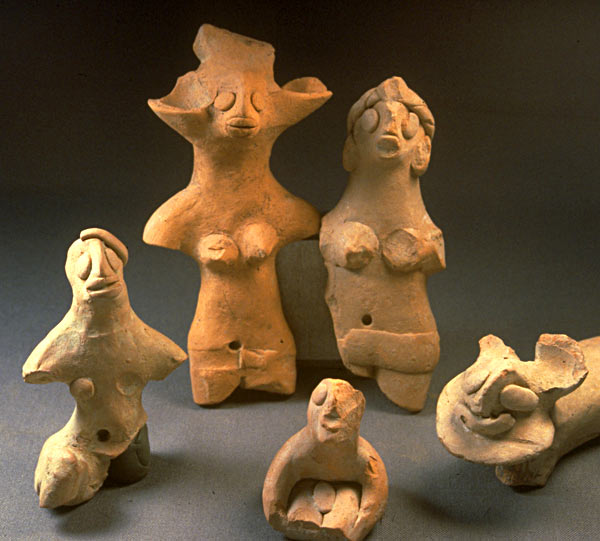
Terracotta Figurines from Harappa in 72 slides. A look at the many types of female, male and other figurines and what they may tell us of Indus people.
By Sharri Clark.
|
1. A group of terracotta figurines from Harappa After many decades of research, the Indus Civilization is still something of an enigma -- an ancient civilization with a writing system that still awaits convincing decipherment, monumental… |
|
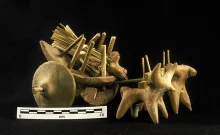
2. Ox- or water buffalo-drawn cart with driver from Harappa Terracotta figurines have long been considered toys, often without question. Other objects such as carts, wheels, and charpoi (cots) made of terracotta at a similar scale may reinforce this… |
|
3. Early Harappan stylized female figurine from Harappa The earliest anthropomorphic figurines from Harappa thus far are from the Early Harappan (Ravi Phase, Period 1, and Kot Diji Phase, Period 2) levels. Among these are stylized seated female figurines… |
|
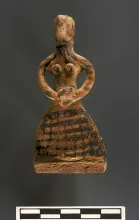
4. Early Harappan female figurine with painted features from Harappa Another style of Early Harappan female figurine holds a round object, possibly a vessel, with both hands at the waist above a flaring lower body which ends in a (broken) forward-extending base. The… |
|
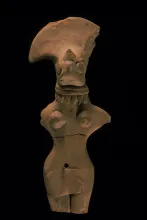
5. Female figurine with a fan-shaped headdress from Harappa At the peak of the Indus Civilization or the Harappan Period (Period 3), the most common dress for female figurines was the belt and/or short skirt usually situated at the same point on the hips as… |
|
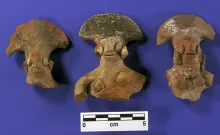
6. Three female figurines with painted fan-shaped headdresses from Harappa Many of the fan-shaped headdresses were painted black. While the headdress may have been worn as a symbol of distinction, it has been suggested that this type of headdress actually represents black… |
|
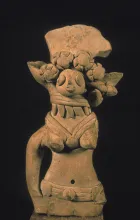
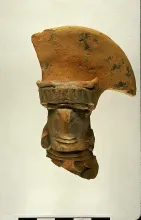
7. Female figurine with a pannier headdress from Harappa Some of the female figurines are very ornate with elaborate headdresses, chokers and/or necklaces, and decorated multiple-strand belts. The fan-shaped headdresses sometimes have panniers or cup-like… |
|
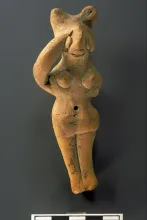
8. Head of a female figurine with a "tiara" headdress from Harappa A few female figurines from Harappa have a sort of "tiara" attached to the front of the fan-shaped headdress. Approximate dimensions (W x H x D): 6.0 x 8.7 x 3.9 cm. |
|
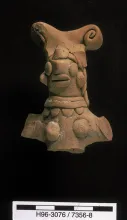
9. Female figurine with a double volute headdress from Harappa Other female figurines have a double volute headdress that is usually decorated and sometimes painted black as well. Female figurines are usually depicted standing with their legs pressed together… |
|
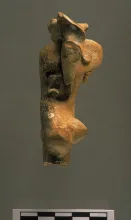
10. Female figurine with a double volute headdress from Harappa The "cones" that often decorate figurine headdresses may be reproductions of the small gold cones that have been found at Indus Civilization sites. Similar small gold cones are still used as hair… |
|
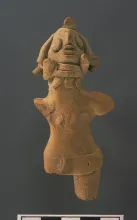
11. Female figurine with painted hair from Harappa In addition to headdresses and hair decorations, loose hair is sometimes depicted on figurines. A few figurines have painted black hair extending from the back of the head to below the shoulders. … |
|
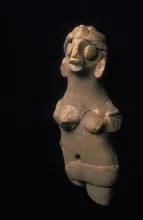
12. Female figurine with locks of hair from Harappa Other figurines have loose hair arranged in "ringlets" or separate locks made of terracotta, possibly representing a wig. Approximate dimensions (W x H x D): 4.0 x 9.1 x 2.9 cm. |
|
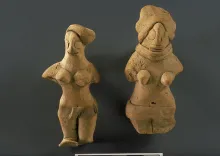
13. Female figurine with a "turban" from Harappa The hair of female figurines is sometimes bound up in a sort of "turban". Approximate dimensions (W x H x D): 3.6 x 9.5 x 2.8 cm. |
|
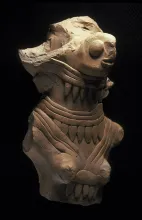
14. Two female figurines with other head decor from Harappa Both male and female figurines may have hair swept around the top of the head, to the side, or to the front. Some female figurines also have a somewhat simple flaring headdress with an attached… |
|
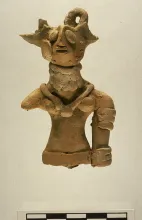
15. Female figurine with three chokers/necklaces from Harappa One of the largest female figurines found at Harappa has a (badly broken) fan-shaped pannier headdress with black residue in the cups of the panniers and a forward-projecting face. She is heavily… |
|
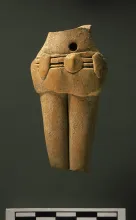
16. Female figurine with painted ornaments from Harappa Some of the ornaments on female figurines were accentuated with white and/or black pigment, and some ornaments were completely rendered in pigment. One female figurine has a choker, a necklace, and… |
|
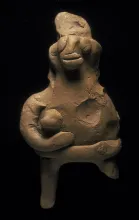
17. Female figurine with a decorated belt and "skirt" from Harappa The multiple-strand belt on some of the female figurines is often accompanied by a plain short "skirt". The applied decorations on the belt may represent beads or other decorations. Approximate… |
|
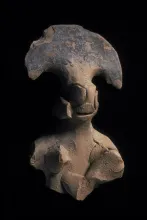
18. "Fat" female figurine from Harappa Although most Indus Civilization female figurines are quite curvaceous, some "fat" female figurines are also found. These are often hollow, but sometimes solid. Like other Indus female figurines,… |
|
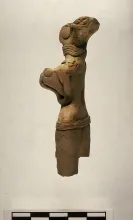
19. Female figurine nursing an infant from Harappa The infants being nursed by female figurines are usually very schematically represented by a bent and pinched roll of clay with or without applied eyes. The head, body, and legs of the infant are… |
|
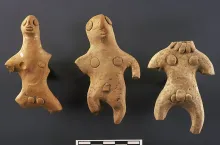
20. Female figurine holding a nursing infant from Harappa The female figurine usually holds the infant's head to her breast with one or both arms encircling the infant. Approximate dimensions (W x H x D): 3.2 x 8.4 x 1.9 cm. |
|
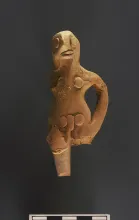
21. Three male figurines from Harappa Male figurines may be distinguished by genitalia and/or small flat nipples. A few male figurines wear chokers with pendants very similar to those worn by females. Some males are depicted with bowed… |
|
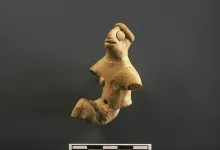
22. Standing male figurine from Harappa Other male figurines stand with their hands on their hips and their legs pressed together, a common posture for female figurines. Approximate dimensions (W x H x D): 4.0 x 9.7 x 2.8 cm. |
|
23. Male figurine from Harappa A few male figurines demonstrate unusual postures such as one with one leg extended forward and the other extended behind. Male figurines also sometimes wear a simple headband around the top of the… |
|
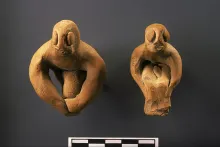
24. Two seated male figurines from Harappa Most male figurines from Harappa sit with knees bent and arms at the sides of the legs or around the knees. Some of these figurines have facial features and even genitalia, and a few have stylized… |
|
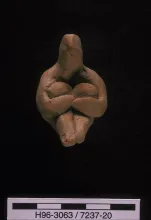
25. Seated male figurine from Harappa Seated male figurines may have their knees drawn up tightly to their chests. While some have facial features and headbands and/or hair, many have featureless faces and no ornamentation. Approximate… |
|
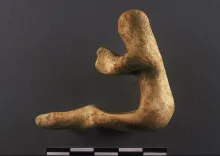
26. Seated male figurine with hands raised from Harappa Another type of male figurine sits with legs extended straight in front of the body and arms raised in front of the chest with hands clasped together, probably a posture of devotion or prayer. … |
|
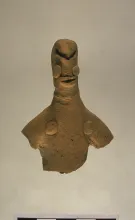
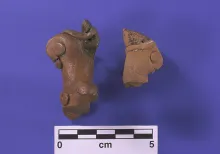
27. Male figurine with hair swept forward from Harappa In addition to different postures, male figurines also exhibit a variety of hairstyles. Both male and female figurines may have hair swept around the top of the head, to the side or to the front. A… |
|
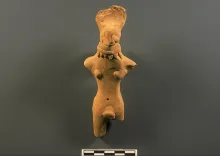
28. Two male figurines with painted hair from Harappa The hair of male figurines is sometimes bound into a sort of folded bun or mounded on top of the head and secured by a headband or a fillet. The hair may be painted black and sometimes also has a… |
|
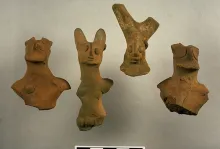
29. Male figurine with a fan-shaped headdress from Harappa Most male figurines from Harappa do not wear headdresses. An unusual exception is a standing male figurine wearing a fan-shaped headdress usually worn by female figurines as well as a choker with… |
|
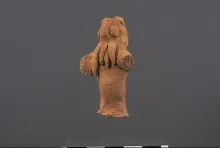
30. Four male figurines with horned headdresses from Harappa Male figurines are sometimes also identified by secondary sex characteristics such as beards. Occasionally, male figurines wear a headdress with two upward and/or outward projections like horns… |
|
31. Composite figurine with horns from Harappa A few figurines are not clearly male or female, or even anthropomorphic or animal. One unusual recently discovered figurine has no clear sex characteristics. It does have two projections (broken off)… |
|
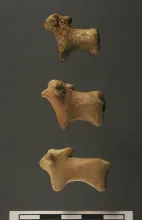
32. Three Early Harappan zebu figurines from Harappa The earliest animal figurines from Harappa are Early Harappan (Ravi Phase, Period 1 and Kot Diji Phase, Period 2) zebu figurines. They are typically very small with joined legs and stylized humps. A… |
|
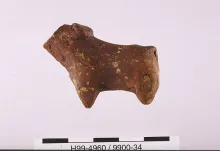
33. Early Harappan zebu figurine with incised spots from Harappa Some of the Early Harappan zebu figurines were decorated. One example has incised oval spots. It is also stained a deep red, an extreme example of the types of stains often found on figurines that… |
|
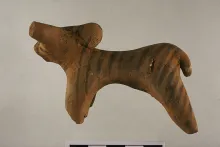
34. Zebu figurine with painted designs from Harappa Other animal and sometimes anthropomorphic figurines are decorated with black stripes and other patterns, and features such as eyes are also sometimes rendered in pigment. Figurines of cattle with… |
|
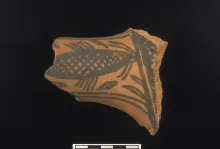
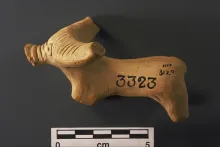
35. Painted torso of a figurine from Harappa Painted designs on figurines occasionally reached the level of those often found on Harappan pottery, especially in the later periods. An interesting combination of figurines with pottery was the… |
|
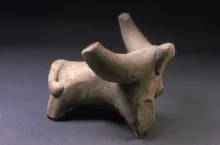
36. Water buffalo figurine from Harappa Water buffalo are often similar to figurines of humpless cattle, except that the water buffalo figurines usually have large (and sometimes incised) backswept horns. Approximate dimensions (W x H(L)… |
|
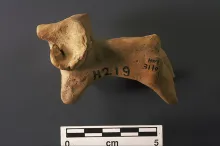
37. Water buffalo figurine from Harappa Some quadruped figurines are difficult to classify because the general form and many of the attributes of humpless cattle, water buffalo, and even rams may be very similar. Any of the three may have… |
|
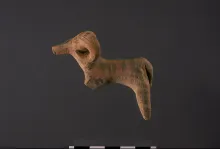
38. Ram figurine from Harappa Ram figurines are identified by their large curled horns. Some have incised horns and/or muzzles like the water buffalo figurines and are only distinguished by the curvature of the horns. … |
|
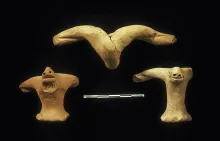
39. Ram figurine with painted designs from Harappa The ram figurines are also sometimes decorated with black stripes and patterns. Some may be painted black. Occasionally, incised "wool" is depicted on the bodies of sheep figurines. Approximate… |
|
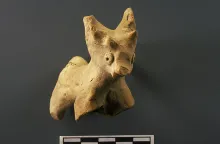
40. Three markhor figurine heads from Harappa In addition to domestic animals, wild animals such as the markhor (wild goat) are represented in the corpus of Indus figurines. The markhor figurines’ distinctive long spiral horns were formed by… |
|
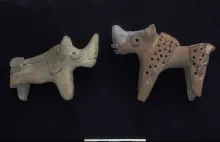
41. Deer figurine from Harappa Other depictions of wild animals include deer figurines with pronged antlers. Deer bones found at Harappa may indicate that deer were hunted. Approximate dimensions (W x H(L) x D): 3.7 x 10.0 x 6.0… |
|
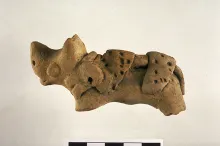
42. Two rhinoceros figurines from Harappa Larger wild animals such as the rhinoceros with its distinctive "horned" snout are also represented. Although the rhinoceros is no longer found in many areas of the Indus region, rhinoceros bones… |
|
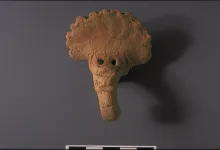
43. Rhinoceros figurine from Harappa Although it was surely a wild animal, some of the rhinoceros figurines wear collars. While a collar might indicate domestication, it is unlikely that this is the case with the rhinoceros, although… |
|
44. Elephant figurine head with painted designs from Harappa It is unknown whether elephants were domesticated in the Indus Civilization. However, one of the few elephant figurines from Harappa is a head with large stylized ears and red and white stripes… |
|
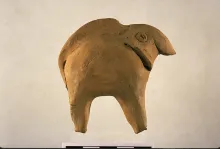
45. Hollow elephant figurine from Harappa Another elephant figurine has an undecorated head with two flat ears and a trunk (all broken) on a round hollow body. Approximate dimensions (W x H(L) x D): 4.5 x 7.1 x 7.1 cm. |
|
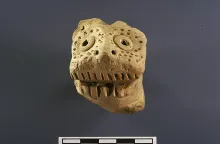
46. Feline figurine from Harappa Among the dangerous wild animals represented in the figurine corpus are large wild felines. One feline figurine with punctuate designs on the face (possibly representing spots) and an open mouth… |
|
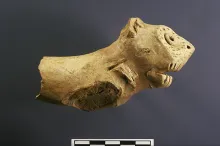
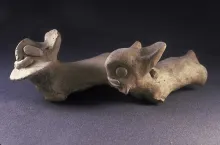
47. Feline figurine from Harappa Many of the feline figurines are depicted with collars around their necks (as with the rhinoceros). Rather than indicating that these large cats were tame, this symbol of domestication may have been… |
|
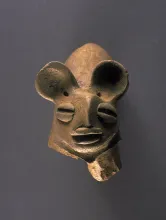
48. Two feline figurines from Harappa Other feline figurines with large round ears and beards may represent tigers or lions. They are often depicted either standing or lying down with their legs extended to one side. Approximate… |
|
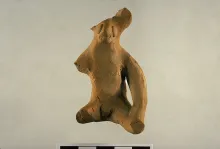
49. Feline figurine with "coffee bean" eyes from Harappa It has been suggested that some feline figurines have anthropomorphic facial features. While features such as "coffee bean" eyes are unusual, the facial features of many animal figurines are stylized… |
|
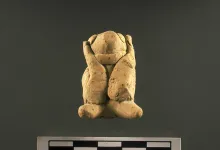
50. Bear figurine from Harappa The Asiatic bear with its large round ears and elongated snout sometimes sits with its front paws on its rear legs, the same posture that is depicted in some figurines. It might have been captured by… |
|
51. Monkey figurine from Harappa Monkeys are also still found in South Asia, both in the wild and as pets. A few of the Indus figurines represent uniquely primate postures, such as a monkey sitting with its long arms and hands held… |
|
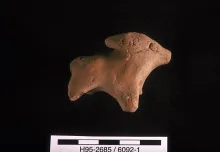
52. Hare? figurine from Harappa Some animal figurines with long ears, especially those with the ears laid back against round hollow bodies, have been identified as hares. One animal figurine with long ears laid back above a small… |
|
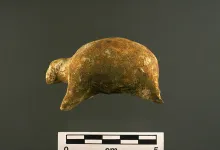
53. Turtle figurine from Harappa Several turtle figurines have been found at Harappa, some with few defined features and others with clearly delineated shells and other features. The gharial is also represented among the figurines,… |
|
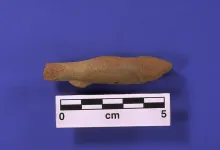
54. Fish figurine from Harappa Another aquatic creature represented in the figurine corpus of Harappa is the fish, which has applied fins, incised gills, and a vertical hole through the center of its body. Like the gharial, the… |
|
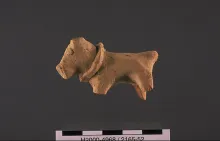
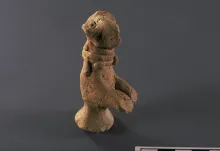
55. Dog figurine with a collar from Harappa Some texts from ancient Mesopotamia mention imports received from the land of "Meluhha", widely considered a reference to the Indus Civilization. Among these imports, according to some… |
|
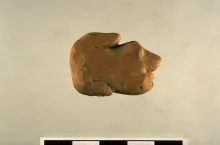
56. "Begging dog" figurine from Harappa The somewhat schematic "begging dog" figurine on a circular base holds its front paws in front of its body, a posture that is commonly associated with dogs. The figurine wears an elaborate collar… |
|
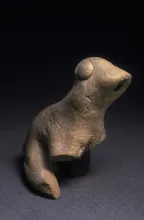
57. Crouching dog figurine from Harappa Dogs are also depicted in playful postures, such as one small dog that seems to be crouching with its tail curving up and onto its back. Approximate dimensions (W x H (L) x D): 1.9 x 3.3 x 2.1 cm. |
|
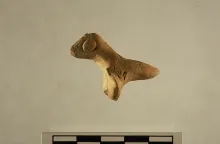
58. Unidentified animal figurine from Harappa Although many animal figurines have identifiable traits (e. g., the applied "hide" and horn typical of a rhinoceros figurine), some figurines are not readily identifiable. Animal figurines that are… |
|
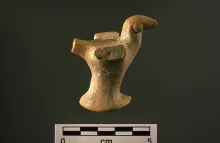
59. Bird figurine from Harappa Several types of birds are represented in figurines. Bird figurines with long tapered tails probably represent parakeets. These birds often have flattened stylized feet that were attached to other… |
|
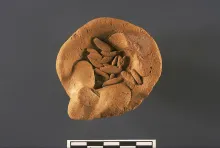
60. Bird figurines and grain from Harappa A circular terracotta platform or container with many small lozenges, possibly representing grain, between the flattened broken feet of two birds perched on opposite sides of the container provides… |
|
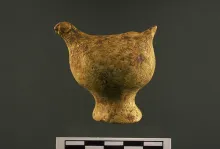
61. Bird figurine from Harappa Many bird figurines have circular bases instead of legs and feet. Some have outstretched wings and may represent birds in flight. Approximate dimensions (W x H(L) x D): 4.4 x 5.4 x 5.3 cm. |
|
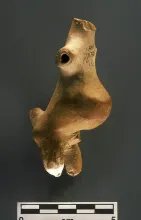
62. Bird figurine/whistle from Harappa Other bird figurines have no wings depicted at all and either stand on a circular base or on two legs that were inserted into the base of the body (only holes remain). Still others have no legs… |
|
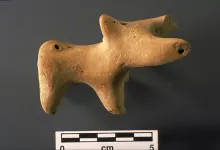
63. Animal "puppet" figurine from Harappa Some terracotta figurines such as the unusual ithyphallic pot-bellied animal figurines with tails and holes through the shoulders for movable arms were probably used as toys or puppets. A few… |
|
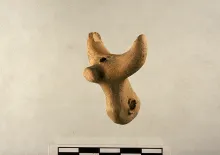
64. Body of a figurine with a movable head and tail from Harappa Another figurine that may have been used as a toy is the quadruped, probably a bovine, with a movable head and tail. It usually has pierced projections extending from the base of the neck to secure… |
|
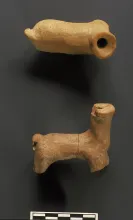
65. Movable head of a bovine figurine from Harappa The movable heads of figurines often depict cattle. They are usually pierced laterally through the neck and vertically or sagittally through the head in order to secure them to the bodies and control… |
|
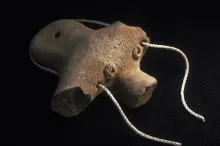
66. Bodies of two figurines with neck shafts from Harappa A different style of quadruped body has a vertical neck shaft for attaching and possibly changing the (separate) head. Figurine heads with this type of neck shaft include the markhor heads discussed… |
|
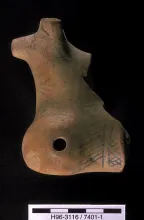
67. Movable head of a bovine figurine from Harappa Some movable figurine heads are pierced in other places, such as through the horns on either side of the head. Approximate dimensions (W x H(L) x D): 7.2 x 9.4 x 3.0 cm. |
|
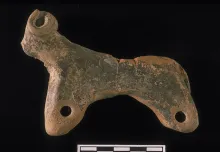
68. Wheeled zebu figurine from Harappa A small subset of the figurines from Harappa originally had wheels. Of the many small terracotta wheels found at Harappa, at least some must have been intended for these wheeled objects. One style of… |
|
69. Wheeled ram figurine from Harappa One type of wheeled figurine has lateral holes for the axles through the ends of the legs. Approximate dimensions (W x H(L) x D): 3.6 x 11.0 x 7.5 cm. |
|
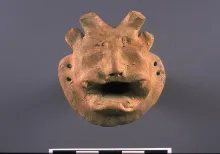
70. Mask/amulet from Harappa Loosely included under the rubric of terracotta "figurines" are the terracotta masks found at some Harappan sites. One mask clearly has a feline face with an open mouth with exposed fangs, a beard,… |
|
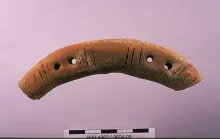
71. Attachable water buffalo horns from Harappa The appropriation of animal attributes can be accomplished through such paraphernalia as masks/amulets and other objects that can be attached to a costume. Several large terracotta water buffalo… |
|
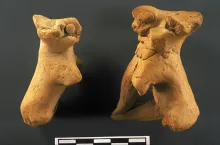
72. Two composite anthropomorphic / animal figurines from Harappa Whether or not the masks/amulets and attachable water buffalo horns were used in magic or other rituals, unusual and composite animals and anthropomorphic/animal beings were clearly a part of Indus… |