
A Balochi Fishing Village
Ethnoarchaeological research on fisheries that appeared to have similar levels of technology present during the Indus Valley tradition. By William R. Belcher.

|
1. William Belcher in Harappa I currently work as a forensic anthropologist and archaeologist for the U.S. government. I am also the Assistant Field Director of the Harappa Archaeological Research Project (HARP) in central Punjab… |
|
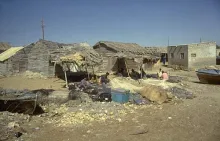
2. Near Hawkes Bay, Karachi Between 1993-1994 I lived and worked in a small Baluch fishing village near Hawkes Bay, Abdur Rehman Goth, just west of Karachi, Pakistan (goth is the Baluchi word for village). My main research… |
|
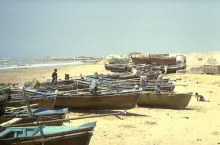
3. Hawkes Bay, near Karachi Near-shore fishing requires the use of boats and larger, stronger nets than the inshore fisheries. The Baluchi boats are stylistically different from the Sindhi boats. Abdur Rheman Goth, the Baluch… |
|
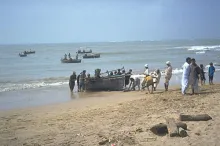
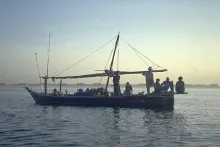
4. Boat being hauled ashore Every morning many boats are hauled down into the water with help from other fishermen waiting to get to their boats. This is an extremely cooperative move by all the fisherfolk within the village… |
|
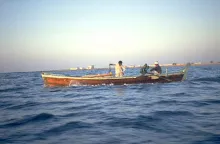
5. Fishing boat Traditionally, boats used a lateen (triangular) sail. However, now the primarily means of locomotion is the side-mounted motor-propeller system. Trolling operations are time-consuming and the boat is… |
|
6. Fishing in Hawkes Bay Forward Long gill nets of various sizes and configurations are set in areas along the coast. The type of net and the fishing grounds vary in accordance to season and type of fish that is being caught. Sting… |

|
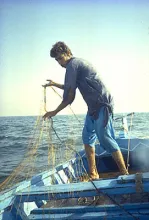
7. Young fisherman Fishing usually begins early in the morning. Fisherfolk often leave well before the sun rises and return in the early afternoon. After eating lunch and napping, the men would gather to repair boats… |
|
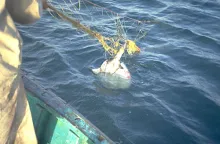
8. Drawing nets Nets are drawn up by hand along the side of the boat. It is very strenuous and tiring work that can take up to 60 to 90 minutes per net. Often the nets catch on rocks and are broken free only through… |
|
9. Sting Ray being pulled aboard Fish, like this large sting ray, are pulled on board and then removed from the nets. Prior to removing the sting rays, the stinger had to be snapped off. Otherwise, the flailing tail could impale… |
|
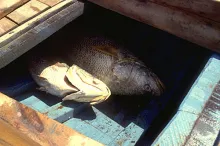
10. Fish below deck Fish are stowed beneath the floor boards of the boat's deck to protect them from the sun. The traditional vessels do not carry ice and it is important to keep these fish out of the sun so that they… |
|
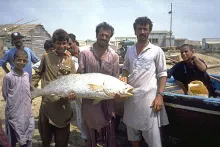
11. Sua Fish Seasonal variation in fish occurs and is important to document these changes in order to understand seasonal fishing patterns in the present as well as the past. What I found in discussions with… |
|
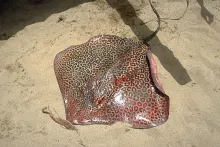
12. Sting Ray While not usually used for food, sting-rays, sharks, and skates are important to the fishing industry itself. The livers are harvested by specialists in the village who boil them down to make a thick… |
|
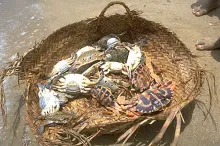
13. Crabs in Basket Crabs and other crustaceans are caught and used as a minor food item. These animals are considered extremely "hot" and are eaten for the treatment of ailments such as the flu or colds. Many Asian… |
|
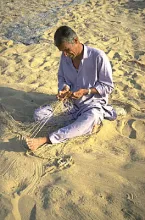
14. Knitting Net Mornings are usually spent fishing while afternoons are spent repairing nets. Although most nets are now commercially manufactured, repair work is down by the owners or their sons. Fishermen work in… |
|
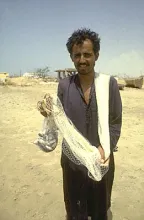
15. Fisherman with net The main fish protein source focuses on smaller fish that are caught in the inshore area. One of the main methods used to catch these is a casting net. Unlike other forms of fishing nets, this is an… |
|
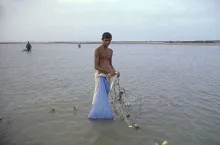
16. Boy with inshore gill net Other fish are used for commercial sale, but these inshore fisheries provide the bulk of food for the household. Here a younger member of a local household is pulling up his inshore fixed gill net… |
|
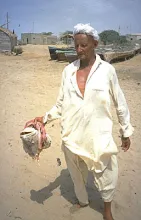
17. Man with Fish head Today large fish are primarily for sale on the commercial market. A fishmonger would arrive from town to purchase the fish and take them to the various urban markets in town. This individual also… |
|
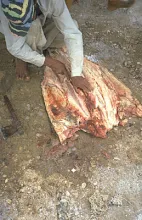
18. Preparing a fish to be dried and salted In the fishing village, fish are prepared for drying. The heads and gills are removed and the fish is split up the middle along its belly. Slits are cut into the meat and salt is spread in to help… |
|
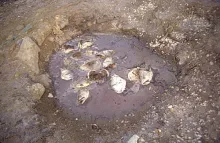
19. Fish in brine pit Medium and large fish are then placed into a brine pit and soak up salty brine before being placed in the sun. The meat is not usually used for human consumption, although it is traded into the… |
|
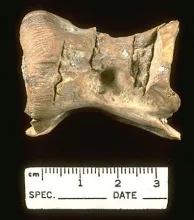
20. Sua fish bone Through the study of butchery and fishing practices, it is possible to reconstruct behaviors that occurred in the past. These cut marks on a sua fish (Protonibea diacanthus) mid-body vertebra are… |
|
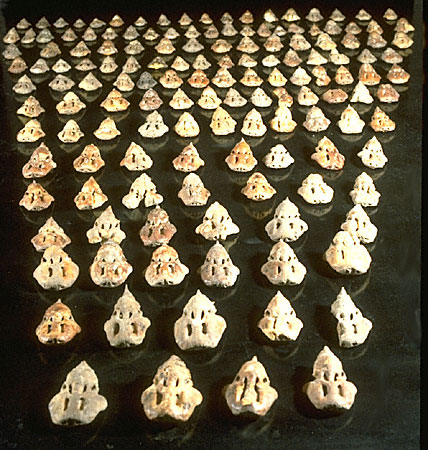
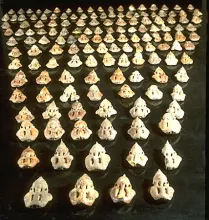
21. Dhoter Fish Remains, Balakot Also recovered from Balakot were the distinctive neurocrania of the dhoter fish (Pomadasys hasta). This fish account for almost 60% of all the fish remains at Balakot. Neurocrania and other cranial… |
|
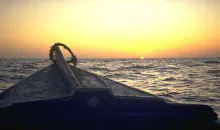
22. Sunset over Hawkes Bay Fishing and trolling often continues up until sunset. I would like to thank the various fisherfolk in Baluchistan, Sindh and Punjab provinces that have allowed me to intrude in their lives. By… |