
A Unicorn Seal
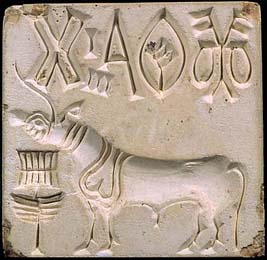
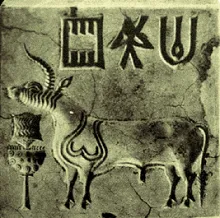
"The (Harappan) animal seals are among the world's greatest examples of an artist's ability to embody the essentials of a given form in artistic shape." (B. Rowland) A close look at one of the animal seals found at Mohenjo-daro.
By Geoffrey Cooke.
|
1. The Unicorn Seal This seal from Mohenjo-daro measures 29 mm (1.14) inches on each side and is made of fired steatite. Steatite is an easily carved soft stone that becomes hard after firing. On the top are four … |
|
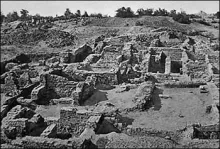
2. Excavation Site It was one of 388 unicorn seals found during the excavations in Mohenjo-daro led by the British archaeologist Ernest Mackay between 1927 and 1931. Mackay dated the seal to the late Period IB, or… |
|
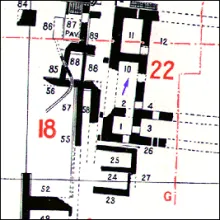
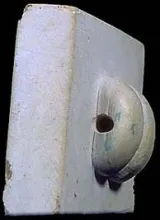
3. Mohenjodaro, D.K. Area, G Section Mackay writes about the large building in Block 22 (p. 152): "At the floor level of the Late II Phase this building measured 51 feet 3 inches, North-South, by 56 ft. long at the north and about 54… |
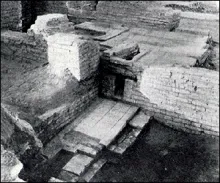
|
4. Building, Block 22 Mackay continues about the building in Block 22 (p. 153): "There are, for instance, two footings, each about 6 ins. Wide, along the southern side of room 3, the lower one 8.3 ft. and the other 6.2… |
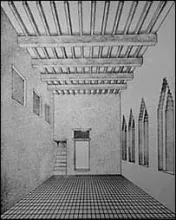
|
5. Indus Interior Mackay speculates on the owner of this building in Block 22, which may have looked something like this sketch by him of another Indus home (p. 154): I am inclined to think that this building was the… |
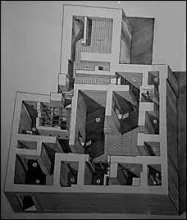
|
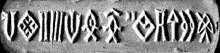
6. Indus House Sketch This sketch was made by Mackay of House VIII, A section in the H.R. area of Mohenjo-daro. |
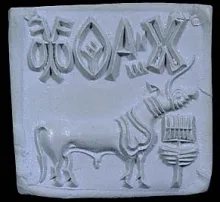
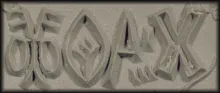
|
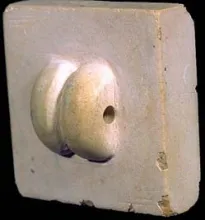
7. Sealing Seals were used to make a sealing, or positive imprint, like this modern resin one made from the original seal. Sealings were used in ancient times for trade. They would be made on ceramics or the… |
|
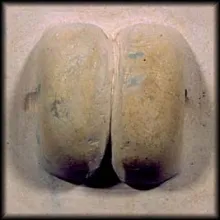
8. Back of Seal Mackay continues (p. 377 in Marshall 1931): "The boss was then carefully rounded off after the groove that always runs across its centre had been roughly made by a V-shaped cut. The rounding of the… |
|
9. Boss Mackay writes that most of the bosses on the backs of seals had the same size and shape. The perforation always runs in the direction of the animal's body, to help keep the seal upright when worn… |
|
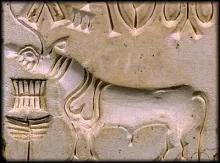
10. The Unicorn If the figure does represent a cattle species, the clearly carved collar, garland and necklace could help explain its function. Sacrificial animals in village India are often garlanded and decorated… |
|
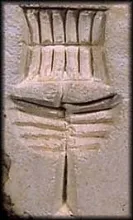
11. Trough The unicorn always has this object in front of it. There are at least five theories about this object. Mackay and Marshall thought it was the feeding trough or "manger" still seen in Sindh today… |
|
12. Unicorn Seal This unicorn seal was also discovered during the late 1927-31 excavations at Mohenjo-daro. One theory holds that the bull actually has two horns, but that these have been stylized to one because of… |
|
13. Amulet In addition to any commercial functions, the seal may also have designated a position of authority. The motif on the seal could also have been an amulet or charm. The seal itself was probably worn… |
|
14. Sealing One of the longer inscriptions made from a seal found during Mackay's excavations between 1927-1931 in Mohenjo-daro (D.K. 9134). There are few long Indus inscriptions; another similarly long… |
|
15. Seal Signs Although the Indus Valley script is still undeciphered, there is some agreement among a number of leading scholars that it represents some sort of proto-Dravidian language common in South India today… |
|
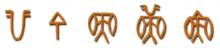
16. Terminal Signs These are the five most common terminal signs on the Indus Valley seals according to Iravatham Mahadevan's analysis (1982:316). The first sign (from the left), the most common in the Indus script … |
|
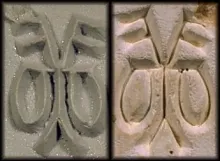
17. Terminal Sign Iravatham Mahadevan believes that the terminal sign used here is actually a combination of two signs. The bottom part (figure carrying) denotes a bearer of office. The top represents a jar, which is… |
|
18. Geoffrey Cook Biography Geoffrey Cook is a historian, writer and artist. His primary academic interest is the British period in India. He has an advanced degree in South Asian studies, and was a student of the late George… |