
A Walk Through Lothal
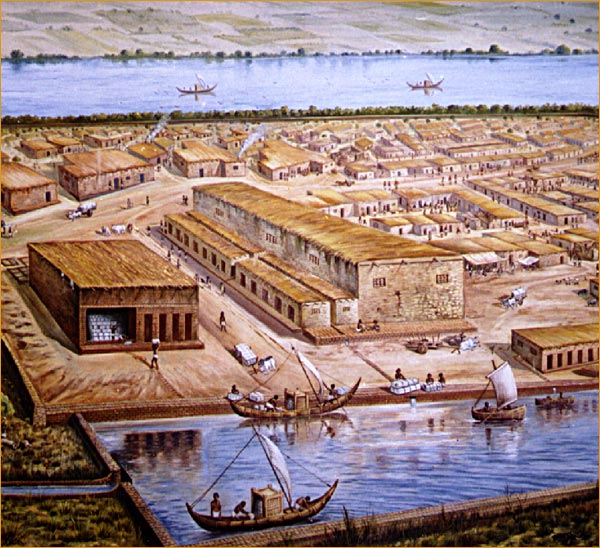
A slideshow on Lothal - an ancient Indus site in Gujarat on the Gulf of Combay where trade once flourished with other ancient civilizations including the ancient Indus Valley peoples.
|
1. Ancient Lothal The ancient Indus port of Lothal as envisaged by the Archaeological Survey of India. |
|
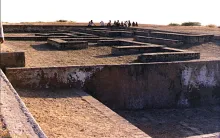
2. Dockyard at Lothal in summer The dominant sight at Lothal is the massive dockyard which has helped make this place so important to international archaeology. Spanning an area 37 meters from east to west and nearly 22 meters from… |
|
3. Dockyard at Lothal after the rains An inlet channel 1.7 meters above the bottom level of the 4.26 meter deep tank allowed excess water to escape. Other inlets prevented siltation of the tanks and erosion of the banks. After a ship… |
|
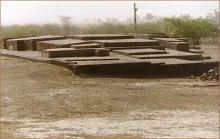
4. Warehouse at Lothal A long wharf connected the dockyard to the main warehouse, which was located on a plinth some 3.5 meters above the ground. The first concern of the Harappan engineers might have been to ensure… |
|
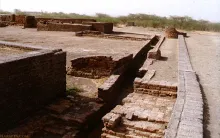
5. The acropolis, Lothal Near the warehouse, also on a high plinth, is the upper town or acropolis which spans 128 by 61 meters and has extensive drainage systems. |
|
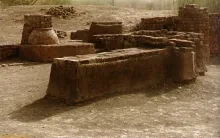
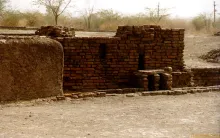
6. Kitchen of upper town with pot furnace in Lothal Kitchen of upper town with pot furnace. |
|
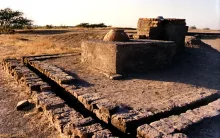
7. Lothal Pot Furnace Pot Furnace |
|
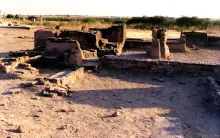
8. Cooking blocks in an upper town kitchen Lothal The rooms of the upper town were obviously built for upper classes. They had private pathed brick baths and a remarkable network of drains and cesspools. |
|
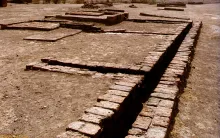
9. Row of private baths in Lothal The proximity of the seat of power to the warehouse may have ensured that the ruler and his entourage could inspect stocks easily. An ivory workshop in the acropolis suggests that elephants may have… |
|
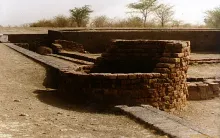
10. Lothal Drainage system An elaborate sanitary and drainage system, a hallmark of ancient Indus cities, is in evidence everywhere at Lothal. |
|
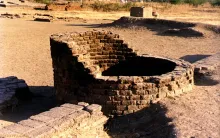
11. Well in Lothal Kitchens and wells were spread across the upper town. |
|
12. An old well in Lothal The bricks, typical of an ancient Indus city, were usually of a standard size. |
|
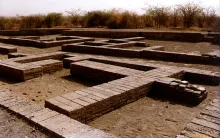
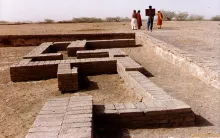
13. Lower town of Lothal From the plinth of the acropolis, it is a short distance to the lower town. The lower town contains a commercial and residential area. The arterial streets running from north to south were flanked by… |
|
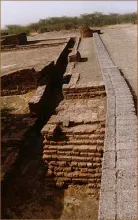
14. Lower town of Lothal The bead factories, situated where the 8th street of the commercial area and the 5th street of the residential area meet, comprised the main industry of the Harappans. They probably settled (or their… |
|
15. Lothal: Sanitary drainage at the acropolis The most unique aspect of planning during the Indus Valley civilization was the system of underground drainage. The main sewer, 1.5 meters deep and 91 cm across, connected to many north-south and… |
|
16. Town planning at Lothal Town planning at Lothal. |