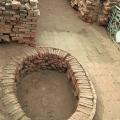
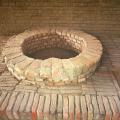
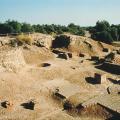
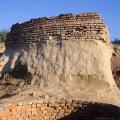
This oval well is located in room 19 northeast of Great Bath. It is the only well with an oval structure and may have been used to draw water for nearby bathing platforms or for filling the Great Bath. >
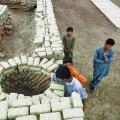
Although most wells were located inside private buildings, the city planners of Mohenjo Daro provided some public wells that could be accessed directly from the main street. This well and nearby walls have been covered with mud brick to protect them… >
This well was associated with a finely constructed bathing platform. A stairway leads up to the well and platform from a lower room. The walls and well have been covered with mud brick and sprayed with clay slurry to protect them from salt crystalli… >
Each block of buildings at Mohenjo-Daro was supplied with one or more wells such as this one in DK-G Area. When archaeologists excavated the fill around the well they were left standing to show the final levels of use. >
This unique well and associated bathing platform was discovered in the course of building a catchment drain around the site. It was reconstructed on the ground floor of Mohenjo-daro site museum. >
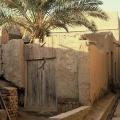
The old part of the city of Sehwan, Sindh, is built on a high mound of the earlier buried city, much like ancient Mohenjo-daro. A neighborhood well is located alongside the street that has an open drain. A private courtyard is shaded by a date palm… >
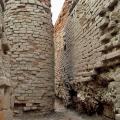
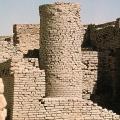
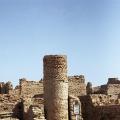
Private wells were rebuilt over many generations to serve the needs of a large household or neighborhood. This well in DK G area at Mohenjo-daro stands like a chimney because all of the surrounding earth has been removed by excavation. >
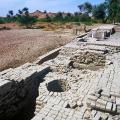
A large public well and public bathing platforms were found in the southern part of Mound AB at Harappa. These public bathing areas may also have been used for washing clothes as is common in many traditional cities in Pakistan and India today. >
The foreground well is only one of eight wells, public and private, that have thus far been discovered at Harappa. Most of the water used by the population probably came from the adjacent Ravi River. The curved wall was probably a large drain used d… >