Home

Main navigation

  • home
  • slides
  • essays
  • articles
  • books
  • video
  • q & a
  • blog
Secondary menu
  • about us
    • scholars
    • privacy
    • support
    • image rights
    • credits
    • contact us
  • resources

Weights

Ancient Indus civilization weights.

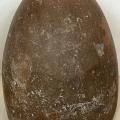
Linga?

Sir John Marshall has an extensive section (see Images 2 and 3 for his references) on linga, yoni and the often difficult job of distinguishing them from game pieces and stones in general (Mohenjo-daro, p. 58-63). We reproduce the entire section fro… >

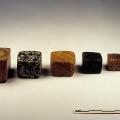
Weights, Harappa

Cubical weights in graduated sizes.These weights conform to the standard Harappan binary weight system that was used in all of the settlements. The smallest weight in this series is 0.856 grams and the most common weight is approximately 13.7 grams,… >

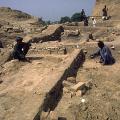
Ancient Indus weight discovery

Pakistani excavators working in Trench 43. The man on the right has just discovered a spherical agate weight (image 68) while cleaning the section for photography. >

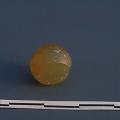
Spherical agate weight with one side flattened

Spherical agate weight with one side flattened (H2000-4496/9880-01). This weight does not conform to the standard Harappan weight system and may indicate the use of a separate weight system for international trade with Central Asia or other regions. >

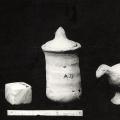
Terracotta and Stone Objects

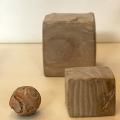
From left to right, a miniature version of a cylindrical perforated jar made of terracotta, a cubical chert stone weight, a small terracotta cylindrical drinking vessel, with a toy terracotta spinning top incorrectly placed on it upside down to serv… >

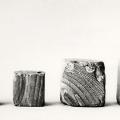
Cubical Weights

Five cubical weights, possibly all made of chert; find nos. noted: AB 16, B 588, AB 101. From mound AB, and Vats noted that most were found from extensions of Pit I and II (Vats 1940, Vol. 1, p. 361). Vats described the shape as cuboid, and no… >

Three Large Weights

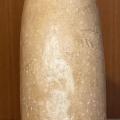
Sir John Marshall writes about weights (there are three candidates shown above) Mohenjo-daro (p. 461): "The large number of weights that have been found at Mohenjo-daro, in small houses as well as large, suggests that the housewife realized the n… >

Weights

The National Museum of Pakistan description is shown below, although the conical piece in the lower left is a carved shell object and not a weight: : "A large number of stone weights have been found in Mohenjodaro, Harappa and other sites in Sin… >

© Harappa.com 1995-2026 31