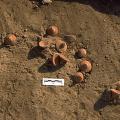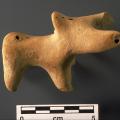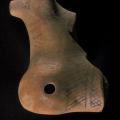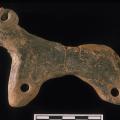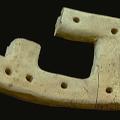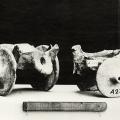
The wheel (A 233) was found inside the large earthen chati unearthed in the first long trench on Mound F. "(21) The only other kind of toy is a cart (Plate X. Photo. No. 2749) consisting of a shallow rectangular basin with rings for the ends of t… >
MADE PERHAPS TO AMUSE LITTLE PREHISTORIC PEOPLE IN THE INDUS VALLEY TWO OR THREE THOUSAND YEARS AGO: TERRA-COTTA ANIMALS, BIRDS, AND OTHER TOYS FROM MOHENJO-DARO. >
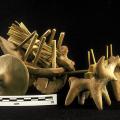
Terra cotta toy carts from the Harappan period site of Nausharo in Baluchistan. Holes along the length of the cart serve to hold wooden side bars and at the center of the cart two of the wooden side bars can be extended below the frame to hold the a… >
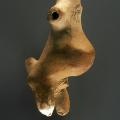
Hollow egg shaped whistles may have been used for making music and for accompaniment to singers, a tradition that is still present in rural areas of Pakistan and India. The bird shaped whistles were probably used to amuse children and may represent … >
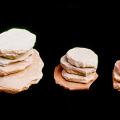
One of the games played by the children of the Indus cities may be represented by terra cotta discs found in graduated sizes. A game called "pittu" is played throughout Pakistan and northern India even today, with stacks of pottery discs and a ball … >

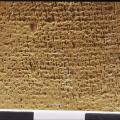
Textile impressions on a toy bed made during the Harappan Phase (c. 2600-1900 BCE) show finely woven cloth made of uniformly spun threads. This example shows a fairly tightly woven normal weave. >
Terracotta figurines have long been considered toys, often without question. Other objects such as carts, wheels, and charpoi (cots) made of terracotta at a similar scale may reinforce this interpretation for at least some of the terracotta figurine… >