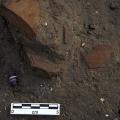
Unique cylindrical object made of maroon and white faience from Harappa (H99-3856/8756-26 from Trench 43, length = 21.9 mm). Numerous examples of this identical type of bead have been found in other parts of Harappa, but this may have been where the… >
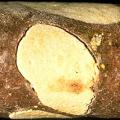
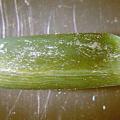
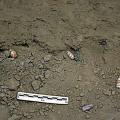
This unique green stone bead, hardly 1 cm long, was found in the ash at the edge of a Kot Diji phase hearth. The material has not yet been identified, but it may be a form of obsidian. >
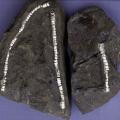
Fragments of a steatite bead necklace recovered from the floor of a house dating to the Ravi Phase (circa 3100 BCE, see 9). The beads have been fired and glazed. >
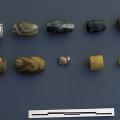
A banded agate bead (at left), a long terra cotta bead (center) and a cylindrical steatite bead (at right) were all found in the deposits of a room in Trench 54. >
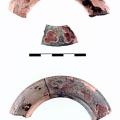
Terracotta bangle fragments decorated with red trefoils outlined in white on a green ground from late Period 3C deposits in Trench 43. This image shows both sides of the two fragments (H98-3516/8667-01 & H98-3517/8679-01). >
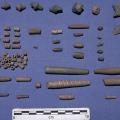
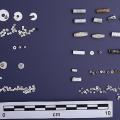
Steatite beads from the Early Harappan Periods at Harappa. On the right are many different styles of Ravi Phase beads (circa 3300-2800 BC). Note the blue green glazed bead in the center and the row of unfired beads in the second to the bottom row. T… >