Home

Main navigation

  • home
  • slides
  • essays
  • articles
  • books
  • video
  • q & a
  • blog
Secondary menu
  • about us
    • scholars
    • privacy
    • support
    • image rights
    • credits
    • contact us
  • resources

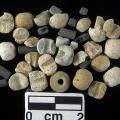
Faience beads

Faience beads from ancient Indus sites.

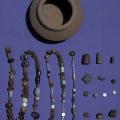
Pot with beads

In the end, the small Late Harappan Period Pot yielded 133 beads and other decorative objects. Although left behind by a bead collector at almost 1700 BCE, the wide variety of beads and other objects found inside the pot belong to all periods of Har… >


Faience beads

Faience beads of different shapes and colors were found in the bead pot (83). Some of these appear to be imitations of the natural stones; deep azure blue lapis lazuli, blue-green turquoise and banded to imitate banded agate. A red-brown glass-like… >

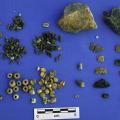
Broken faience beads

Many broken and some complete faience beads of different colors were recovered in the eroded surface layers of the slope on the south side of Trench 54. >

Group of artefacts

Artifacts found in one excavation unit from the Trench 54 South workshop include raw steatite, sawn blocklets, incised tablets, a broken mold, and numerous faience beads as well as faience tablets. Also note the chert blade and flake (upper left) th… >

© Harappa.com 1995-2026 31