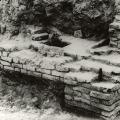
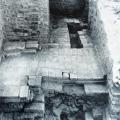
Sculpture in thickness of wall in the N.E. corner of pit II from S.E. The photograph is of brick structure, with a label PII 99. No sculpture is visible. PII is Pit II, AB Mound, and Sahni stated that: “No structural remains were met with in t… >
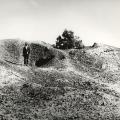
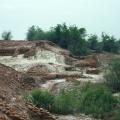
Sahni mentioned the highest mound at Harappa to be ‘the summit of the northern portion of Mound B”. This is one of the views of this portion, with a person, wearing glasses, standing. Of ‘brick-robbing’ at Harappa in the modern times, John Marsha… >
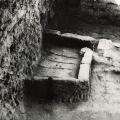
View of mound B showing the narrow space at the west end of the twin chatti the small earthen jar fixed among bricks. View of a rectangular structure, with walls of bricks and an embedded earthen jar at the corner. Sahni described the structures … >
"It was therefore decided to carry a trench wide and long enough to lay bare the general lie of the remains hidden in it. A plan and section of this trench will be published in a special article and will show the nature of the structural remains exposed." >
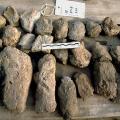
Ravi phase hand-formed (not in molds) mud-bricks were found in the early levels mixed with ash and broken pieces of pottery. They may originally have been part of a firing structure or kiln. >
A large section of the mud brick platform in the UM Area was removed to be sure that it was not concealing other brick structures. The fired bricks of the upper buildings measured 7 x 15 x 29 cm (approximately 1:2:4 ratio), while those of earlier bu… >