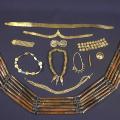
Fired steatite was an important material used in many different types of Indus jewelry. Steatite beads are found in all four necklaces in the center of this collection of jewelry from Harappa and Mohenjo-daro. >
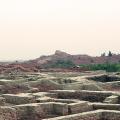
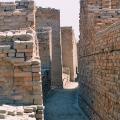
This general view of houses in VS area shows the color of the brick walls after the use of mud brick and clay slurry for conservation. The lower parts of the walls have the natural reddish color of fired brick and the upper portion is oliveÐgrey mud… >
This drain cuts through the edge of the so-called granary. If the entire drain were constructed along with the Great Bath, this feature would indicate that the original "granary" was built before the great bath. >
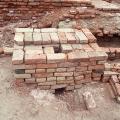
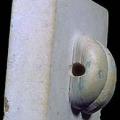
Toilets would have been an essential feature in Mohenjo-daro, but the early excavators identified most toilets as post-cremation burial urns or sump pots. This brick structure (one of two - see Slide 48) had a hole in the top that was connected to a… >
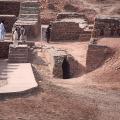
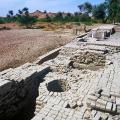
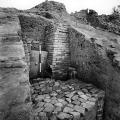
This well was associated with a finely constructed bathing platform. A stairway leads up to the well and platform from a lower room. The walls and well have been covered with mud brick and sprayed with clay slurry to protect them from salt crystalli… >
In addition to any commercial functions, the seal may also have designated a position of authority. The motif on the seal could also have been an amulet or charm. The seal itself was probably worn around the neck, with a chord passed through the … >
Possibly ACC-Citadel Gateway. Vertical walls and voids where there would have been streets are visible in what may be the ACC Citadel Gateway excavation area. The exact location is not clear. No. 55 29 Duplicate photographs >