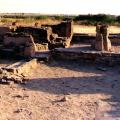
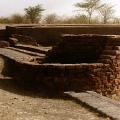
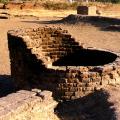
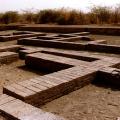
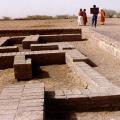
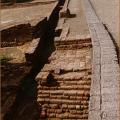
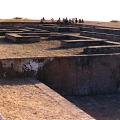
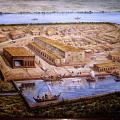
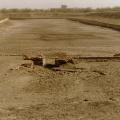
Slides by Dinesh Shukla- a variety of photos and images of the archaeological site Lothal - which have contributed to the continued study of the ancient Indus Valley civilization.
The proximity of the seat of power to the warehouse may have ensured that the ruler and his entourage could inspect stocks easily. An ivory workshop in the acropolis suggests that elephants may have been domesticated to produce the raw material. >
From the plinth of the acropolis, it is a short distance to the lower town. The lower town contains a commercial and residential area. The arterial streets running from north to south were flanked by shops, merchant dwellings and artisan's workshops… >
The bead factories, situated where the 8th street of the commercial area and the 5th street of the residential area meet, comprised the main industry of the Harappans. They probably settled (or their culture came) to the Gulf of Cambay region becaus… >
The most unique aspect of planning during the Indus Valley civilization was the system of underground drainage. The main sewer, 1.5 meters deep and 91 cm across, connected to many north-south and east-west sewers. It was made from bricks smoothened … >
The dominant sight at Lothal is the massive dockyard which has helped make this place so important to international archaeology. Spanning an area 37 meters from east to west and nearly 22 meters from north to south, the dock is said by some to be th… >