Home

Main navigation

  • home
  • slides
  • essays
  • articles
  • books
  • video
  • q & a
  • blog
Secondary menu
  • about us
    • scholars
    • privacy
    • support
    • image rights
    • credits
    • contact us
  • resources
  • see 18 slide essays ▶

An essay which covers an indepth interview with scholar Iravatham Mahadevan and his response to Asko Parpola's study of the Indus Script and writing or communication system.

An Interview with Iravatham Mahadevan

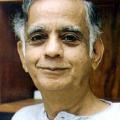
Iravatham Mahadevan

A wide-ranging interview with Iravatham Mahadevan [1930-2018] home on January 17, 1998 with Omar Khan. The interview, held at Mr. Mahadevan's home in Chennai lasted nearly two hours and covered the Brahmi script, the cult object, various signs, his response to Asko Parpola's work. A reflection on a decades-long pursuit of the key to Indus writing by the most important Indi… >

The Indus Fish Sign

Iravatham Mahadevan

Q: Lets come to the specific signs. What do you believe may be some of the best interpretations offered of certain signs? A: Like all Dravidian scholars, I too began with Father Heras. Father Heras was a Spanish Jesuit priest who worked in India and was a celebrated Professor of History in Bombay. It was his brilliant idea that the fish sig… >

The Terminal Indus Sign

Iravatham Mahadevan

A: As regards the other signs, the position is even weaker. There is the famous terminal sign, the most frequent sign, which occupies ten to twelve percent of all Harappan writing. This sign, popularly called the jar sign, is as popular as the letter "e" is in the English language. Q: What are your thoughts about the terminal sign of the In… >

The Indus Arrow and "Harrow" Sign

Iravatham Mahadevan

A: Similarly the twin sign of this jar sign is what is called the arrow sign, or the lance sign. It is a twin functional in the sense that both these signs occur at the end, almost always after other signs which may represent names, so therefore it is another type of grammatical suffix. But one view is, like the one presently held by Parpola, that one is genit… >

Other Indus Signs

Iravatham Mahadevan

Q: What about the signs where you have some very convincing thoughts, the trader and so forth. The logical basis that traders would have to be represented in some way on seals which were meant for trade makes sense. [See Mahadevan's "Indus Script Dictionary" for his speculations] A: It is a moot question whether the Harappans had castes lik… >

Asko Parpola's Work

Iravatham Mahadevan

Q: What are your thoughts on Asko Parpola's work, its importance and where you disagree with him in general. A: Parpola's work is without doubt the most valuable contribution to date in the field of the Indus script. As I have mentioned in my latest paper, his work transcends linguistic boundaries. His contribution in publishing the first c… >

The Unicorn Sign

Iravatham Mahadevan

Q: Let’s talk about your thoughts on the unicorn sign. What do you think about the unicorn sign and what it could designate and what it could mean? A: You mean the unicorn featured on the large seals. We still do not know exactly what animal it is. There is no animal with a single horn like it of course. It still is very likely that it is o… >

The Ancient Indus and Dravidian Cultural Relationship

Iravatham Mahadevan

Q: How do you conceive of the relationship between the Indus culture that existed five thousand years ago and contemporary Dravidian culture here in South India? Prof. Dani, for example, says that doesn't believe that the Indus language was Dravidian because there is just not enough cultural continuity between what is today in South India and what was then in … >

Tamil Paleography

Iravatham Mahadevan

Q: The last thing I'd like to ask you is about your work in early Tamil paleography, and how this is connected if at all to the Indus script work. A: The two are very different fields. The Indus script is a logographic script, which means that each sign stands for a whole word or a whole syllable. The Tamil script, which is an offshoot of t… >

The Future

Iravatham Mahadevan

Q: When you do get back to the Indus script, what are you hoping to do? A: I have some unpublished, rather unfinished papers. One of the things I want to get back to is whether I can fix the phonetic values of some signs. I have some leads, particularly concerning the phonetic values of the terminal signs, which are very important. If at le… >

Pagination

  • Page 1
  • Page 2
  • Next page
  • Last page
© Harappa.com 1995-2026 31