Home

Main navigation

  • home
  • slides
  • essays
  • articles
  • books
  • video
  • q & a
  • blog
Secondary menu
  • about us
    • scholars
    • privacy
    • support
    • image rights
    • credits
    • contact us
  • resources

Paolo Biagi

Articles by Dr. Paolo Biagi, Foscari University, Venice

Archaeology at Ras Muari: Sonari, A Bronze Age Fisher-Gatherers Settlement at the Hab River Mouth (Karachi, Pakistan)

Paolo Biagi

Italian archaeologists have been critical to unearthing the distant human past in Sindh and Balochistan for many years. This paper describes in detail yet another important find which in the words of the authors is "the prehistoric settlement of Sonari (SNR-1). Sonari is the only Bronze Age fisher-… >

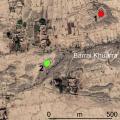
Short Report: A déjeté Levallois tool from Khyber Pakhtunkhwa (Pakistan) and the role it plays in the chronology of the Pleistocene terraces of the Bannu Basin

  • Locations of the Levallois tool on the gravel terraces of Barrai Khuarra
Paolo Biagi

Very little is known about the subcontinent's history hundreds of thousands of years ago, say 300,000-30,000 years ago, which would have been the Middle Paleolithic period for example, except for small clues left at places like the Rohri chert (flint) mines and along the Indus in Sindh and else whe… >

Quarries in Harappa

Paolo Biagi

"Flint was the most important raw material exploited by the third millennium BCE Bronze Age inhabitants of the Indus Valley and its related territories." This uncompromising statement by a scholar and field researcher who has been working in the region for decades offers a window on what must clear… >

Mining Bronze Age Stone Resources: Some examples from the Caucasus (Georgia) and Sindh (Pakistan)

Paolo Biagi

Archaeologists often assume that metals like bronze replaced the need for stone tools, but is this really the case given the evidence in these two areas not to mention select Mediterranean regions? In the Indus region, what was the use of these tools given their limited presence in Mohenjo-daro and Harappa? >

Forgotten Islands of the Past: The Archaeology of the Northern Coast of the Arabian Sea

Paolo Biagi

The author, who has been working in the larger region for decades exploring the long history of human habitation and industry going back tens of thousands of years, turns his attention to the geographic changes in the Indus delta region through the Bronze Age and what recent work shows us were the curious "islands" that once existed in lower Sindh (Dholavira, in Gujarat, is another example of such a later settlement). >

Lakheen-Jo-Daro, an Indus Civilization Settlement at Sukkur in Upper Sindh (Pakistan): A Scrap Copper Hoard and Human Figurine from a Dated Context

Paolo Biagi

We know so little about so many Indus sites, including ones that are buried beneath modern cities and may never be discovered. One such potentially large settlement is Lakheen-Jo-Daro, sometimes also called Lakhan Jo Daro, bits of which have been found in and around the modern city of Sukkur, Sindh, on the Indus River, just across the monumental chert deposits in the Rohri Hills. >

The Amri Chalcolithic Phase in Sindh (Pakistan): What We know and What We Should Know

  • Tharro Hill terrace
Paolo Biagi

Very little is known about the so-called "Amri Phase," as this author refers to an apparently pre-Indus civilization site in Sindh that dates to the 4th millennium BCE. >

Holocene people and sea-level changes along the northern coast of the Arabian Sea (Pakistan)

  • Siranda Lake, Distribution map of the radiocarbon dated sites
Paolo Biagi

This paper develops a key theme relating to the origins of the ancient Indus civilization – the very different geographical reality in the Indus delta and the Arabian coast in the millennia preceding its rise. >

Pagination

  • First page
  • Previous page
  • Page 1
  • Page 2
  • Page 3
  • Page 4
  • Page 5
© Harappa.com 1995-2026 31